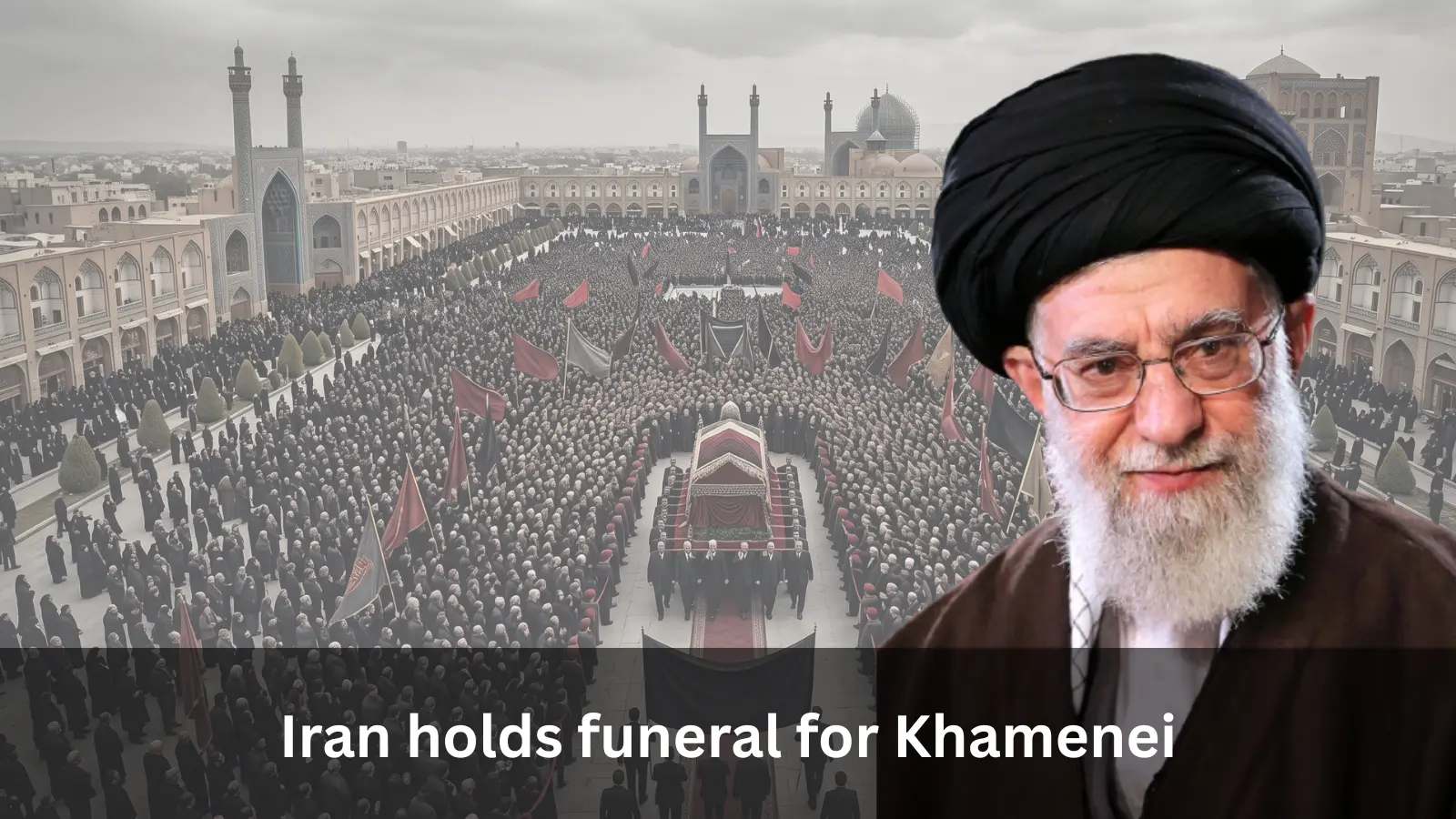
Khamenei Image: By Khamenei.ir, CC BY 4.0, Link
President Donald Trump has declared that the United States will come out on top in its standoff with Iran, saying the country will win “one way or the other.” His comments landed on a day when Iran was consumed by grief and defiance, as the nation held a massive public funeral for its slain supreme leader. The remark, brief as it was, has reignited global attention on the Trump Iran war and what could come next for a region already on edge.
What Trump Actually Said
Speaking from the White House, Trump kept his comments short but pointed. He did not spell out exactly what winning would look like, nor did he outline any specific military or diplomatic steps the administration plans to take. Instead, he projected confidence that no matter how the situation unfolds in the coming weeks, the outcome would tilt in America’s favor.
This kind of vague but firm messaging is not new for Trump, who has often preferred broad declarations over detailed policy statements when it comes to foreign conflicts. For allies and adversaries alike, that ambiguity can be just as unsettling as a direct threat, since it leaves plenty of room for interpretation and speculation about what Washington might do next.
A Nation In Mourning
While Trump was making headlines in Washington, the scene in Iran told a very different story. State television broadcast footage of an enormous funeral procession, with mourners packed into streets and squares stretching for miles. Many wept openly, while others chanted slogans aimed squarely at the West and the United States in particular.
Observers who track the region closely have described the gathering as one of the largest public displays of mourning in Iran’s recent history. The sheer scale of the crowd is being read by some analysts as a signal of internal unity in the face of loss, while others see it as evidence of how carefully orchestrated public displays of grief can be used to project strength during a period that might otherwise appear vulnerable.
Why The Timing Matters
The timing of Trump’s remarks is not a small detail. Iran is currently working through a delicate period that includes questions around succession and internal political stability. Any perceived provocation from outside, whether it comes through words, sanctions, or military posturing, has the potential to shift the situation quickly and unpredictably.
Analysts following the Trump Iran war closely note that leadership transitions in any country tend to create windows of both opportunity and risk. For Iran, this means the next few weeks could see internal factions jockeying for influence even as the country presents a united front to the outside world. For the United States and its allies, it means added uncertainty about who exactly will be making decisions on the Iranian side going forward.
How Washington Is Responding
So far, officials in Washington have declined to elaborate much further on what concrete actions might follow Trump’s statement. This has left plenty of room for speculation among diplomats, journalists, and foreign policy experts, many of whom are trying to read between the lines of an intentionally vague message.
Some believe the comments are aimed more at a domestic audience, meant to project strength and resolve to American voters, rather than being a direct signal to Tehran. Others argue that even loosely worded statements from a sitting president carry real weight on the international stage and could be interpreted by Iranian officials as a signal of intent, regardless of how casually the words were delivered.
Global Reactions And What Comes Next
Around the world, governments and markets are watching closely. Any escalation in the Trump Iran war has the potential to ripple far beyond the immediate region, affecting everything from oil prices to shipping routes to broader alliances in the Middle East. Countries with a stake in regional stability, including several Gulf nations and European powers, are likely to be pushing quietly for restraint on all sides.
For ordinary Iranians, though, the funeral was less about geopolitics and more about a personal and national moment of loss. Many in the crowd expressed a mixture of sorrow and genuine uncertainty about what comes next for their country, both in terms of leadership and in terms of relations with the outside world. That public sentiment, more than any single statement out of Washington, may end up shaping how the next chapter unfolds.
The Bigger Picture
It is worth remembering that statements like these rarely exist in isolation. They tend to build on months, sometimes years, of prior tension, diplomatic back and forth, and shifting alliances. The Trump Iran war narrative has been building steadily, and this latest development is best understood as one more data point in a much longer and more complicated story rather than a sudden, isolated event.
As the mourning period in Iran continues and questions around succession remain unresolved, the world will be watching closely to see whether calm prevails or whether tensions escalate into something more serious. Governments, markets, and everyday citizens across multiple continents have a stake in how this plays out, given how interconnected global energy markets and security alliances have become.
For now, the situation remains fluid. What is clear is that both sides appear to be positioning themselves carefully, aware that the coming weeks could prove pivotal in shaping the broader balance of power in the Middle East for months, if not years, to come.
We will continue to update this story as more details emerge.