FULL-TIME RESULT: Brazil 1-1 Morocco
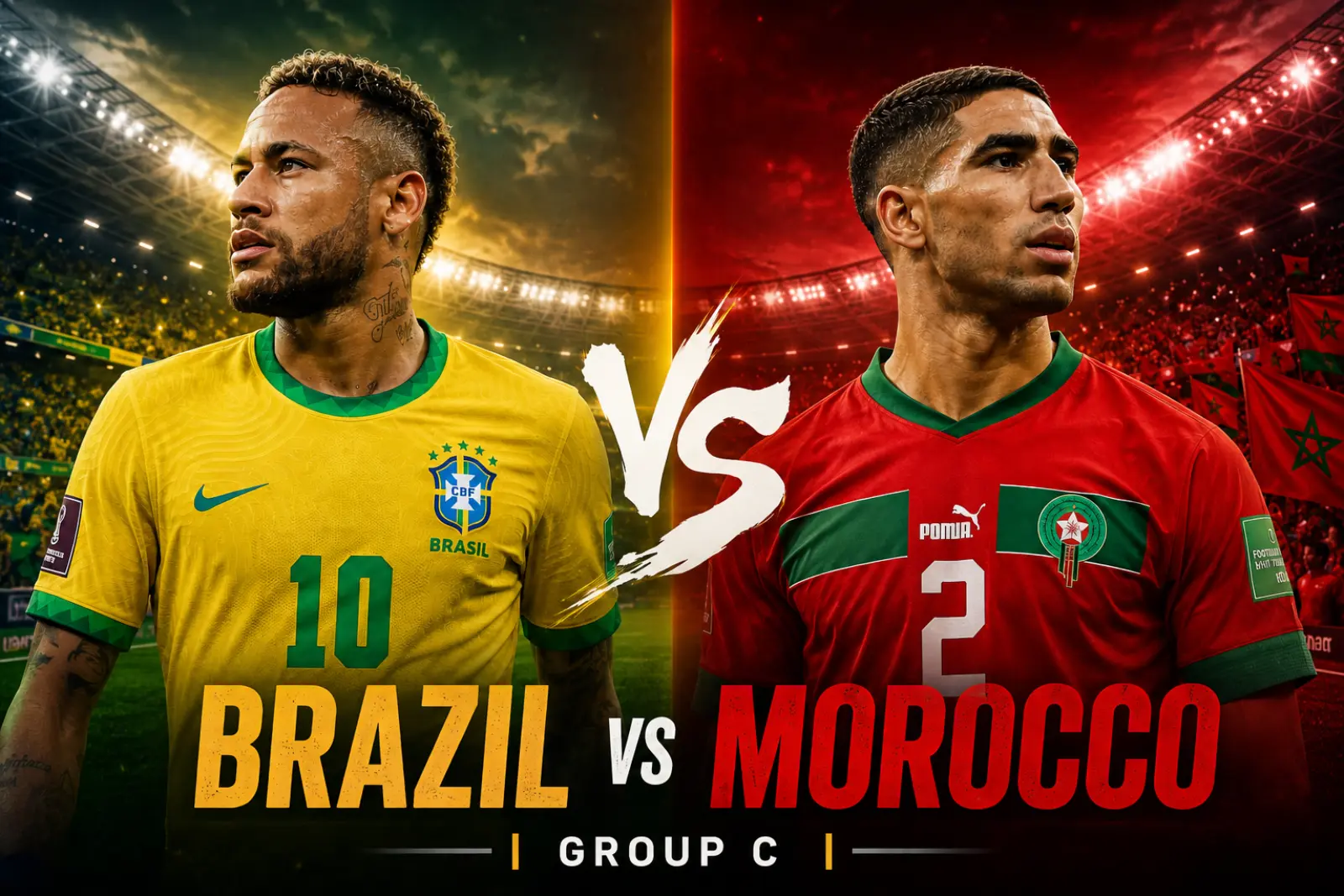
Brazil and Morocco opened their 2026 FIFA World Cup Group C campaigns with a tightly contested 1-1 draw at the New York New Jersey Stadium. In a match defined by high-intensity pressing and tactical adjustments, both sides walked away with a crucial point in what was widely considered the marquee fixture of the opening round.
Morocco stunned the pro-Brazil crowd early, taking the lead in the 21st minute when Ismael Saibari latched onto a precise through-ball from Brahim Díaz and expertly chipped Alisson Becker. Brazil, initially unsettled by Morocco’s aggressive high press, responded through individual brilliance in the 32nd minute. Vinícius Júnior combined with Bruno Guimarães on the left flank before curling a powerful right-footed strike into the top corner, securing his 10th international goal and restoring parity for the five-time champions.
The second half proved to be a tactical chess match, with both managers utilizing substitutes to manage fatigue. While Brazil pushed for a late winner, Morocco’s defensive discipline and a series of key saves from goalkeeper Yassine Bounou ensured the scoreline remained level through the final whistle. The draw extends Brazil’s remarkable streak of being unbeaten in World Cup openers to 21 matches.
Key Match Facts
- The Scorers: Ismael Saibari (21′) for Morocco; Vinícius Júnior (32′) for Brazil. The Independent
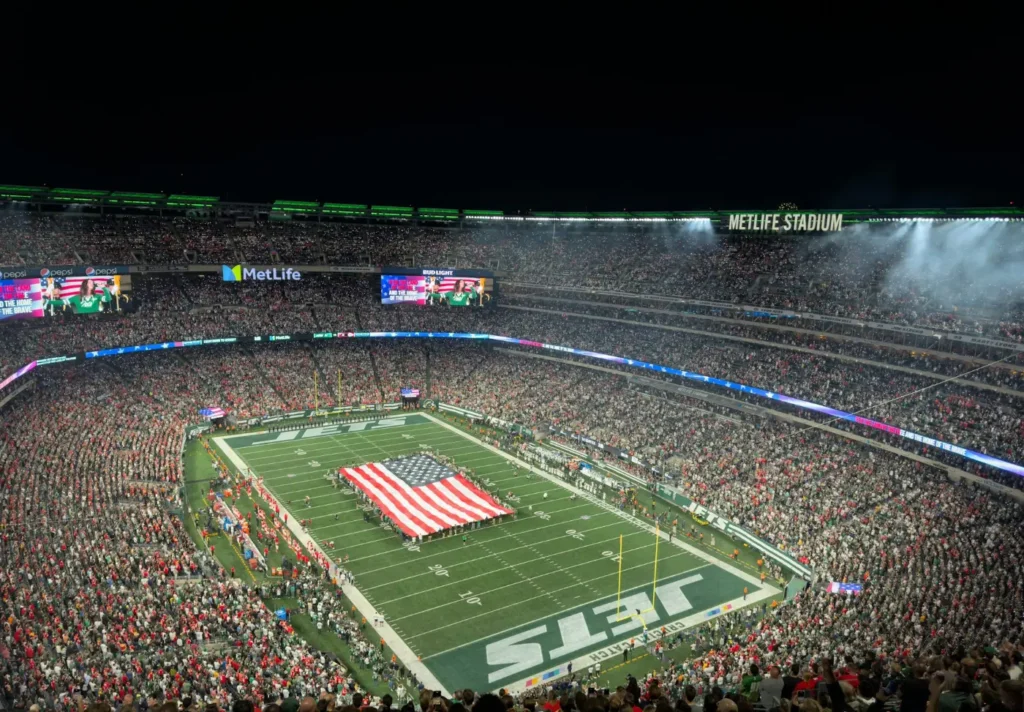
- The Venue: A massive crowd of 80,663 fans packed the New York New Jersey Stadium in East Rutherford. The Times of India
- Tournament Context: Both teams earn one point, leaving Group C finely poised. Brazil moves on to face Haiti in their next fixture, while Morocco prepares for a showdown with Scotland.
- Tactical Milestone: Morocco achieved a unique historic milestone in this match, becoming the first team in World Cup history to field a starting XI entirely composed of players born outside the country they represent.
On June 13, 2026, at MetLife Stadium in East Rutherford, New Jersey, two of world football’s most compelling nations will collide in what is being called the most anticipated group-stage match of the entire FIFA World Cup 2026. Brazil, the five-time world champions and perpetual tournament favourites, against Morocco, the team that in 2022 became the first African nation in history to reach a World Cup semi-final and announced to the world that African football had arrived as a genuine force.
This is not a routine group-stage fixture between an obvious favourite and a smaller nation. This is a match between two teams that genuinely believe they can win it, with contrasting styles so interesting tactically that any serious football fan should be setting an alarm and cancelling dinner plans.
Brazil bring an attack of such explosive individual quality that even the most organised defensive systems in world football struggle to contain it for 90 minutes. Morocco bring the most disciplined, psychologically resilient defensive structure at this entire tournament, forged through four years of development since their historic Qatar campaign. Something has to give. And when it does, it will be the match’s defining story.
| MATCH DETAILS Match: Brazil vs Morocco | Group C, Matchday 1 Venue: MetLife Stadium, East Rutherford, New Jersey Kick-off: June 13, 2026 | 3:00 PM ET / 8:00 PM BST / 11:00 PM Rabat Group C: Brazil | Morocco | Scotland | Haiti What is at stake: Group C leadership, early tournament confidence, tactical statement against a top-tier opponent |
What’s in This Article
MetLife Stadium: The World Cup’s Most Significant Venue
MetLife Stadium is the host venue for the FIFA World Cup 2026 Final on July 19. The fact that it also hosts Brazil vs Morocco in the group stage on June 13 says everything about FIFA’s programming priorities and the global drawing power of both these nations.
Located just across the Hudson River from Manhattan in East Rutherford, New Jersey, MetLife seats 82,500 for football configurations. It is one of the largest and best-equipped stadiums in the United States, and the decision to stage the Final here was made with the understanding that the New York metropolitan area would generate the highest concentration of global football attention of any venue in the tournament.
For Brazil to play their opening match here is both an honour and a pressure. The Seleção in New York, against Morocco, with a global television audience in the hundreds of millions, is not just a football match. It is a global television spectacle of the first order.
| 82,500 MetLife Stadium Capacity | 5 Brazil World Cup Titles | 1 (2022) Morocco WC Semi-Finals |
Brazil: The Seleção’s Case for the 2026 Title
Brazil have not won a World Cup since 2002. The twenty-four-year wait is, by Brazilian standards, an eternity. They have reached semi-finals, quarter-finals, and produced moments of individual brilliance across multiple tournaments. But the trophy itself, which Ronaldo lifted in Yokohama in the rain in 2002, has stayed stubbornly in the past.
The 2026 squad represents another genuine opportunity to end that wait. There is no longer a debate about whether Brazil have world-class attackers. Vinicius Junior is, by most assessments, one of the three most dangerous forwards in world football right now. Raphinha provides a completely different attacking profile on the opposite flank. Endrick, still a teenager, has the raw ability to be decisive against any opposition. The question for Brazil in recent tournaments has never been about attack. It has always been about defensive structure and whether their midfield can control games against organised opponents.
| Brazil | Team Profile | |
| FIFA Ranking | 4th (pre-tournament) |
| Head Coach | Dorival Junior |
| Formation | 4-2-3-1 / 4-3-3 (fluid, depending on opponent) |
| Key Attacking Players | Vinicius Junior, Raphinha, Endrick, Rodrygo |
| Key Midfield Players | Bruno Guimaraes, Lucas Paqueta, Gerson |
| Key Defensive Players | Marquinhos (captain), Gabriel Magalhaes, Danilo, Wendell |
| Goalkeeper | Alisson Becker |
| Biggest Strength | Individual attacking quality; pace; variety of goal threats |
| Biggest Concern | Defensive transition; Morocco’s counter-attack exploits exactly this |
Brazil’s Tactical System in 2026
Dorival Junior operates a 4-2-3-1 that relies on the double pivot of Bruno Guimaraes and Gerson to provide defensive cover while Paqueta operates as the number ten behind the centre-forward. This gives Brazil midfield solidity without sacrificing the creative link between defence and attack.
Vinicius Junior operates from the left wing but is given licence to cut inside, drift into central areas, and create from deeper positions. Raphinha mirrors this from the right. Endrick, as the centre-forward, makes the runs in behind and creates space for Vinicius and Raphinha to arrive late into the areas that they vacate.
Against Morocco specifically, this system has an interesting tension. Morocco will defend in a mid-to-low block and look to absorb pressure, which means the space behind their defensive line is limited. Brazil’s attackers are at their most dangerous when running in behind. Dorival Junior will need to find a way to create depth in the Morocco defensive structure, which likely means periods of patient build-up play that Brazil’s squad is not always temperamentally comfortable with.
Brazil Predicted Starting XI vs Morocco
Brazil Predicted Starting XI vs Morocco
| No. | Player | Position | Club | Key Role in This Match |
| 1 | Alisson Becker | Goalkeeper | Liverpool | Sweeper-keeper; distribution to trigger transitions; wall at the back |
| 2 | Danilo | Right Back | Juventus (Captain) | Overlapping runs on the right; defensive discipline vs Morocco’s left |
| 4 | Marquinhos | Centre Back | PSG (Vice-captain) | Organiser; reads the game; deals with Morocco’s physical aerial threat |
| 3 | Gabriel Magalhaes | Centre Back | Arsenal | Dominant in the air; aggressive in the tackle; Morocco’s set pieces targeted at him |
| 6 | Wendell | Left Back | Porto | Supports Vinicius down the left; tracking back is his primary defensive job |
| 5 | Bruno Guimaraes | Defensive Mid | Newcastle United | The pivot; wins the ball; range of passing to switch play and find space |
| 8 | Gerson | Defensive Mid | Flamengo | Second pivot; tenacious; covers the space Vinicius vacates on the left |
| 10 | Lucas Paqueta | Attacking Mid | West Ham United | The creative link; drops deep to receive and drives; set-piece delivery |
| 11 | Vinicius Junior | Left Wing | Real Madrid | The primary threat; Morocco will double-mark him; creates even when contained |
| 17 | Endrick | Centre Fwd | Real Madrid | Movement in behind; physical battle with Morocco’s CBs; the youth card |
| 21 | Raphinha | Right Wing | FC Barcelona | Direct running; cutting inside onto left foot; creates space for Danilo |
Morocco: The Atlas Lions and the Art of Organised Football
To understand why Morocco are not just a feel-good story but a genuine footballing force, you need to revisit the 2022 World Cup with clear eyes. Morocco did not just get lucky. They did not win because opponents had a bad day. They won because Walid Regragui built a tactical system so disciplined, so cohesive, and so well-adapted to the realities of knockout football that teams with far more individual talent could not find a way through it.
They conceded five goals in seven matches at that tournament. Five goals across seven World Cup games, against Spain, Portugal, and Belgium, against teams with Champions League players at every position. That is not a lucky run. That is elite defensive coaching applied by players who understood exactly what was required of them in every minute of every match.
Four years on, that core defensive structure is still intact. Regragui has had four additional years to develop the tactical system, add depth at key positions, and integrate a new generation of players alongside the established 2022 stars. Morocco arrive at 2026 not as plucky underdogs but as a side confident in their ability to beat Brazil, to beat anyone, on their best day.
| Morocco | Team Profile | |
| FIFA Ranking | 13th |
| Head Coach | Walid Regragui |
| Formation | 4-5-1 / 4-3-3 (low block defending, structured counter-attack) |
| Key Attacking Players | Hakim Ziyech, Youssef En-Nesyri, Soufiane Rahimi |
| Key Midfield Players | Sofyan Amrabat, Azzedine Ounahi, Selim Amallah |
| Key Defensive Players | Achraf Hakimi, Nayef Aguerd, Romain Saiss, Noussair Mazraoui |
| Goalkeeper | Yassine Bounou (Bono) |
| Biggest Strength | Defensive cohesion; set-piece threat; psychological resilience under pressure |
| Biggest Concern | Sustaining offensive quality when required to chase a match |
How Morocco Will Set Up to Stop Brazil
Walid Regragui’s approach to this match is already reasonably predictable, because his approach to matches against technically superior opponents has been remarkably consistent. Morocco will defend in a mid-block, sitting in a compact 4-5-1 shape that denies space between the lines where Paqueta and Vinicius Junior like to operate.
Hakimi will be Morocco’s primary offensive outlet from right back. His role is not just defensive. When Morocco win the ball, Hakimi’s first-movement run up the right channel is the transition trigger. Ziyech, operating just behind En-Nesyri, will look for pockets of space between Brazil’s defensive and midfield lines. Amrabat, as the midfield anchor, protects the space in front of the back four with an intensity and range of motion that makes Morocco’s defensive block significantly harder to penetrate than its shape alone would suggest.
The psychological game is important here too. Morocco know they can frustrate Brazil. They did it to Portugal, to Spain, to Belgium. The experience of having held world-class opposition for 90 minutes without cracking is stored in the memory of this group of players. They will use it.
Morocco Predicted Starting XI vs Brazil
Morocco Predicted Starting XI vs Brazil
| No. | Player | Position | Club | Key Role in This Match |
| 1 | Yassine Bounou | Goalkeeper | Al-Hilal / Sevilla | World-class shot-stopper; commanding at crosses; penalty save specialist |
| 2 | Achraf Hakimi | Right Back | Paris Saint-Germain | Primary counter-attack outlet; Vinicius Junior matchup when Brazil attack left |
| 5 | Nayef Aguerd | Centre Back | West Ham United | Physical aerial presence; tracking Endrick’s runs; commanding in the box |
| 6 | Romain Saiss | Centre Back | Besiktas / Club TBC | Experience; discipline; organises the defensive line through Brazil’s pressure |
| 22 | Noussair Mazraoui | Left Back | Bayern Munich | Disciplined against Raphinha’s direct running; adds width carefully |
| 4 | Sofyan Amrabat | Defensive Mid | Fiorentina / Man Utd | The defensive anchor; intercepts transitions; makes Paqueta’s job harder |
| 8 | Azzedine Ounahi | Central Mid | Olympique Marseille | Box-to-box runner; carries the ball in transition; links Amrabat and Ziyech |
| 7 | Selim Amallah | Central Mid | Club TBC | Pressing and covering; Paqueta’s shadow; energy over 90 minutes |
| 10 | Hakim Ziyech | Attacking Mid | Galatasaray / Club TBC | Creativity in pockets; set-piece delivery; Morocco’s best chance creator |
| 11 | Soufiane Rahimi | Left Wing | Al-Ain / Club TBC | Pace and directness on the left counter-attack; Brazil’s right back watches him |
| 9 | Youssef En-Nesyri | Centre Fwd | Fenerbahce | Aerial threat; holds the ball; makes Brazil’s centre-backs defend backwards |
The Tactical Collision: Attack vs Defence at the Highest Level
Brazil vs Morocco is one of those rare group-stage matches where the tactical contrast is so complete and so interesting that it resembles a chess problem more than a conventional football match. Brazil have the pieces to win comfortably. Morocco have the system designed to prevent exactly that from happening. Something has to give.
Key Battle 1: Vinicius Junior vs Achraf Hakimi
This is the match within the match. Vinicius Junior, on paper, is one of the most difficult forwards in world football to contain in a direct one-on-one situation. Hakimi, on paper, is one of the best attacking fullbacks in world football and a defender who is comfortable in 1v1 situations. In practice, this means 90 minutes of the finest individual battle in Group C.
Hakimi will not simply track Vinicius. He will try to invite pressure onto Brazil’s left side early, anticipating the touch and positioning to intercept. Vinicius, for his part, knows that Hakimi likes to bomb forward in Morocco’s counter-attacks, which means the space behind Hakimi is a potential target for Brazil’s left side runs. The player who wins the space battle wins the match’s most important individual contest.
Post-match Battle Update: This was the headline individual duel, and both stars had moments of brilliance. While Hakimi was instrumental in Morocco’s aggressive first-half push – frequently overlapping and pinning Brazil back – Vinícius Júnior proved why he is a difference-maker. He ultimately won this duel by drifting inside to score a stunning 32nd-minute equalizer, demonstrating that even when Hakimi limited his space out wide, the Brazilian could punish the defense from central areas.
Key Battle 2: Alisson vs the Morocco Block
Alisson Becker is one of the world’s best goalkeepers, but his value in this match extends beyond shot-stopping. Against a defensive Morocco setup, his distribution from the back becomes a weapon. Long, accurate passes to switch the point of attack quickly can stretch Morocco’s compact block and create the wider spaces that Vinicius and Raphinha need. If Alisson’s passing accuracy is high and his decision-making under pressure is calm, Brazil can find wide spaces to exploit. If Morocco can force Alisson into shorter, safer passes, their block stays intact.
Post-match Battle Update: Morocco’s defensive block was remarkably disciplined, frustrating Brazil’s high-profile attack for long stretches. Alisson, meanwhile, was tested early by Ismael Saibari’s clinical chip in the 21st minute – a goal that highlighted the danger of Morocco’s rapid transitions. Alisson remained alert throughout the second half, making a crucial late-game intervention to block a long-range effort and preserve the point, proving his importance as a last line of defense against Morocco’s dangerous counters.
Key Battle 3: Paqueta vs Amrabat in the Space Between the Lines
The space between Morocco’s defensive line and their midfield line is where Brazil’s attacking moves need to originate. Paqueta, as the number ten, is the player tasked with finding and exploiting that space. Amrabat, as Morocco’s defensive midfielder, is specifically responsible for closing that space and denying Paqueta any time on the ball when he does receive it.
Amrabat’s physical intensity and positional intelligence made him one of the most talked-about players at the 2022 World Cup. His performance in this role against Brazil will be decisive. If he neutralises Paqueta, Morocco’s block stays solid and Brazil struggle to find the decisive pass. If Paqueta finds ways around or in behind him, Brazil’s quality in the final third takes over.
Post-match Battle Update: This midfield tussle was the most critical area of the pitch. In the first half, Morocco’s engine room, anchored by Amrabat, effectively bypassed Brazil’s midfield, finding pockets of space between the lines that left Brazil’s center-backs exposed. Lucas Paquetá struggled to impose his creative influence early on as the distances between the Brazilian midfield trio were too large. While Brazil gained more control in the second half, Amrabat’s persistent screening and tactical discipline ensured that the space between the lines remained a difficult terrain for Paquetá to operate in, limiting the Seleção’s flow.
| This is the match that will tell us whether Morocco’s 2022 semi-final was a peak or a launchpad. The answer will come from whether their defensive system can hold against the world’s most explosively talented attack. Source: Planet Headline |
Group C Context: Why This Match Sets the Tone
Group C contains Brazil, Morocco, Scotland, and Haiti. On paper, Brazil and Morocco should advance. Scotland and Haiti are competitive but not expected to challenge the top two for qualification. That means the Brazil vs Morocco result on Day 1 has enormous implications for who tops the group and who takes second.
Topping Group C sets up a more favourable Round of 32 bracket path. The team that finishes second faces a trickier path in the early knockout rounds. The result of this match, therefore, is not just about three points. It is about bracket positioning for the entire tournament, which means both teams will treat it with a level of tactical seriousness that a typical group-game might not receive.
Brazil vs Morocco Result Scenarios | Group C Impact
| Scenario | Group C Impact |
| Brazil win | Brazil effectively secure group-stage qualification with 2 matches remaining. Morocco must take points from Scotland and Haiti to confirm second place. |
| Morocco win | Historic result. Morocco top Group C early. Brazil face pressure and must win their remaining two matches to confirm a place in the Round of 32. |
| Draw (0-0 or 1-1) | Most likely scenario. Both teams advance from a position of strength. The Group C narrative stays alive until the final matchday. |
| High-scoring draw | Signals an open, attacking match. Both defences exposed. Scotland and Haiti’s remaining fixtures become more relevant to Group C qualification. |
Historical Context: Brazil and Morocco at World Cups
Brazil and Morocco have not met frequently at World Cup level. Morocco’s previous best result before 2022 was reaching the second round in 1986 as Africa’s first qualifier from that stage. Brazil’s World Cup record is the most decorated of any nation in history. The symmetry between these two nations at the 2026 tournament, in many ways, represents the arc of football globalisation. The game that was once dominated by South America and Europe is now a genuinely global competition, and Morocco’s presence as a top-ten threat at this World Cup is the clearest evidence of that shift.
For Brazil, this is also a match against the template that is most difficult for their system. They are not facing a team that will try to out-possess them or out-attack them. They are facing a team that will out-organise them and trust the structure. That is the kind of opponent that has historically given Brazil the most trouble at major tournaments.
Match Prediction: Brazil vs Morocco
This match ends in a draw. Not because neither team is good enough to win, but because both teams are too good at what they do for the other to break them down decisively in 90 minutes.
Brazil will have the better of possession. Vinicius will create moments. Raphinha will deliver from the right. Endrick will make defenders uncomfortable with his movement. But Morocco’s block will hold for long stretches, Amrabat will limit Paqueta’s influence, and Bounou will produce at least one exceptional save that keeps the score level.
Morocco’s counter-attacks through Hakimi and Ziyech will create two or three moments of genuine danger. Alisson will be called upon. The crowd at MetLife will be treated to an absorbing, tense, tactically fascinating 90 minutes in which the final score does not reflect either team’s ambitions or the quality on display.
| PLANET HEADLINE PREDICTION Brazil 1-1 Morocco Scorers: Vinicius Junior (58′, dribble into the box, low finish) | En-Nesyri (74′, header from Ziyech corner) Man of Match: Sofyan Amrabat | 14 ball recoveries, shadowed Paqueta for 90 minutes, total defensive masterclass Key Moment: En-Nesyri’s equalising header at 74 minutes from a Ziyech corner silences the crowd and confirms Morocco have the quality and character to compete at the highest level. Group C after Matchday 1: Brazil and Morocco level on 1 point each. Scotland and Haiti results from their opening fixtures shape the group picture. See Day 2 Group Predictions for full Group C analysis. |
What to Watch Beyond the Score
- Vinicius Junior’s body language in the first 20 minutes. When he is confident and engaged, he gets on the ball early and drives at defenders. Watch whether Morocco’s double-marking frustrates or motivates him.
- Amrabat’s positioning when Brazil build possession from the back. Every time Paqueta drops deep, Amrabat should follow. If he does not, Brazil finds the space they need.
- Hakimi’s forward runs when Morocco win possession. His overlap timing is extraordinarily precise. Watch whether Brazil’s left back and left midfielder coordinate quickly enough to close the space.
- Bounou’s command of his area. Morocco’s goalkeeper is at his most valuable when collecting crosses into the box under pressure. Brazil’s wide deliveries from Raphinha and Danilo will test him repeatedly.
- The crowd atmosphere at MetLife. The stadium’s Brazilian and Moroccan communities in the New York metropolitan area are both substantial. The noise levels in this match will be exceptional.
- Endrick’s movements off the ball. As a teenager at his first World Cup, his ability to stay focused, make his runs, and occupy Morocco’s centre-backs without receiving much service will show his mental quality.
How to Watch Brazil vs Morocco
Where to Watch Brazil vs Morocco | Global Broadcast Guide
| Region | Broadcaster | Streaming Option |
| United States | FOX, FS1 (English) / Telemundo (Spanish) | Peacock, Telemundo Deportes |
| United Kingdom | BBC One / BBC iPlayer | BBC iPlayer (free) |
| Brazil | TV Globo, SporTV | Globoplay |
| Morocco | SNRT, BeIN Sports MENA | SNRT Live, BeIN Connect |
| India | Unite8 Sports, ZEE5 | ZEE5 app & website |
| Australia | SBS | SBS On Demand (free) |
| Canada | TSN, CTV | TSN Direct, CTV app |
FAQ
What group is Brazil in at World Cup 2026?
Brazil is competing in Group C, alongside Morocco, Haiti, and Scotland.
What group is Morocco in at World Cup 2026?
Morocco is also placed in Group C for the 2026 FIFA World Cup, sharing the group with Brazil, Haiti, and Scotland.
When do Brazil play Morocco at World Cup 2026?
The match between Brazil and Morocco is scheduled for June 13, 2026, with kickoff set for 6:00 p.m. local time (EDT).
Where is Brazil vs. Morocco being played at the 2026 World Cup?
This Group C encounter will take place at the New York New Jersey Stadium in East Rutherford, New Jersey.