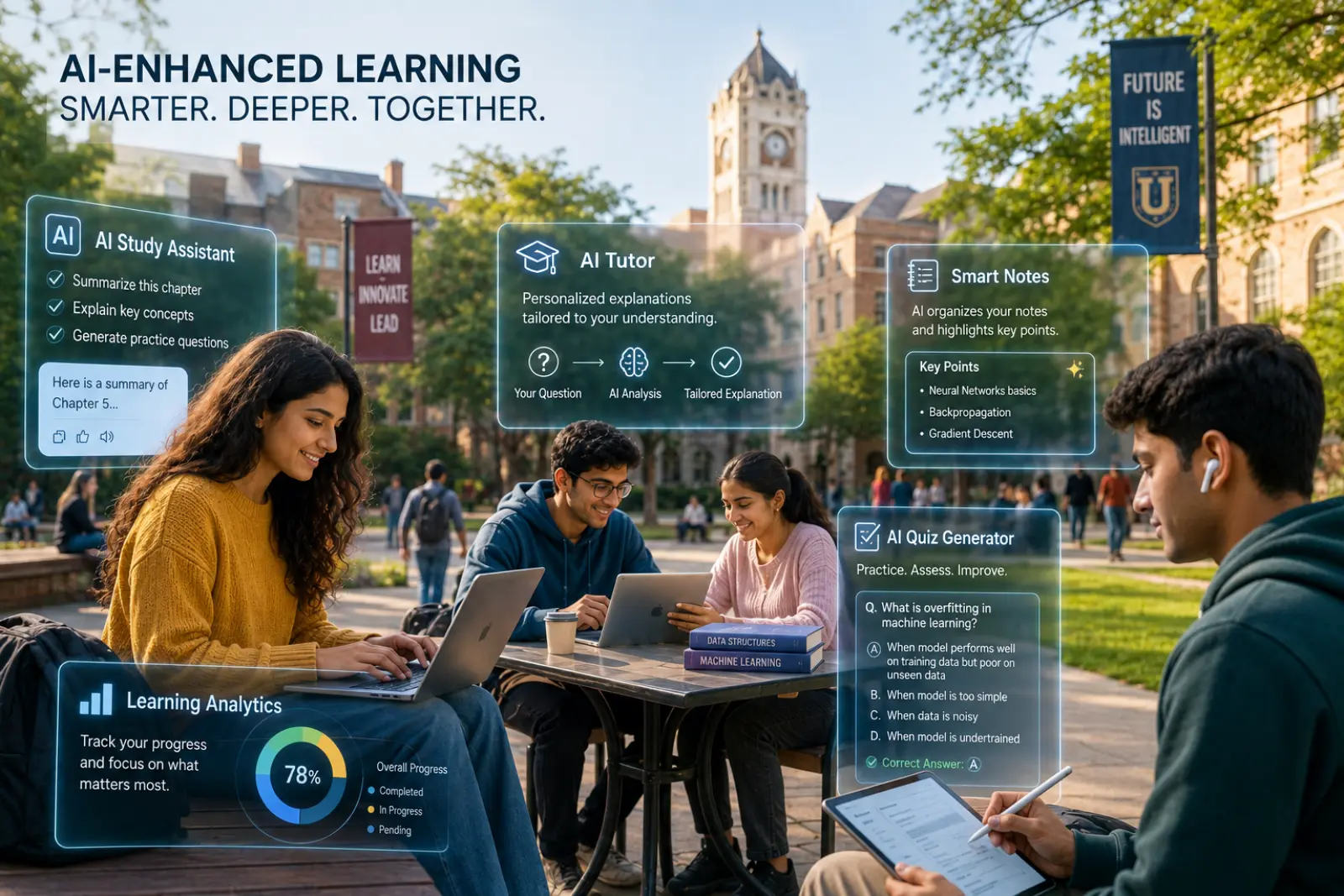
The “one-size-fits-all” lecture model that has defined university education for centuries is being fundamentally disrupted by Artificial Intelligence. In 2026, higher education institutions are leveraging AI to create Personalized Learning Pathways, ensuring that every student receives a curriculum that adapts to their unique knowledge gaps, learning pace, and career aspirations.
From Static Curriculum to Adaptive Modules
Traditional courses often forced students to progress at the same rate, leaving some behind while others were bored. AI-powered platforms now assess a student’s mastery level in real-time. If a student struggles with a specific physics concept, the AI platform instantly offers an alternative, personalized set of learning materials – such as an interactive animation, a simplified video tutorial, or a series of targeted practice exercises – to ensure the student masters the core concept before moving forward.
The AI-Augmented Professor
This technology does not replace professors; it empowers them. By automating the grading of technical assignments and analyzing large datasets of student performance, AI alerts professors exactly which students are at risk of falling behind. This allows faculty to spend less time on administrative logistics and more time on high-impact mentorship, discussion-led seminars, and hands-on laboratory research.