The four-year degree is being decoupled from the career. In 2026, the job market is shifting away from the traditional, pedigree-based hiring model – where a degree from a top university was the sole proxy for competence – toward Skill-Based Hiring. The engine driving this change is the Micro-credential.
The Micro-credential Advantage
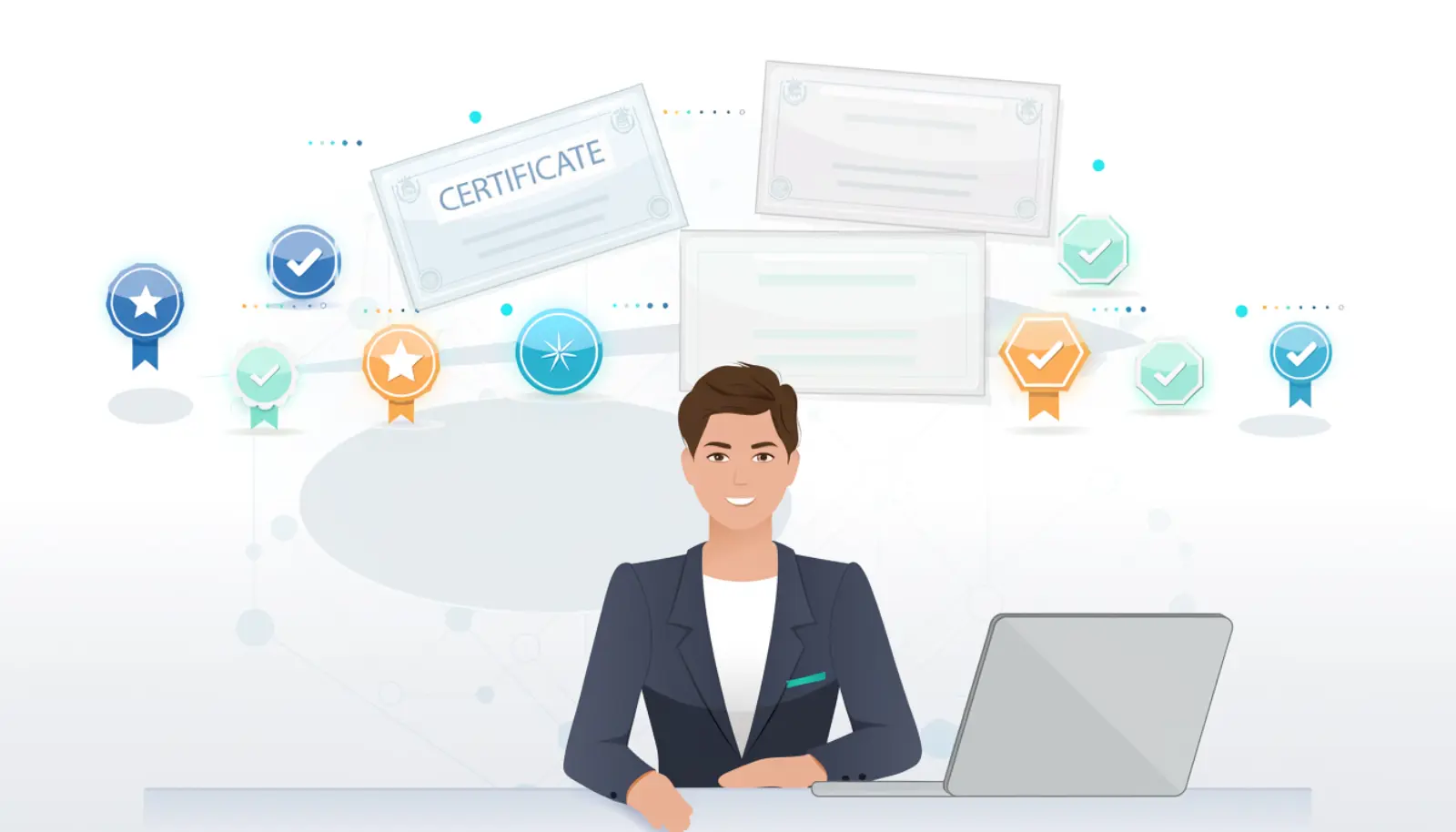
A micro-credential is a focused, verified, and short-form certification that proves you can perform a specific task. Unlike a college course that covers a broad theory, a micro-credential proves you can execute:
- Azure Cloud Architecture
- Prompt Engineering for Enterprise
- Sustainable Supply Chain Auditing
Why Companies are Changing
For hiring managers, the problem with degrees is skill decay. Technology changes so fast that a degree from four years ago might not cover the tools used today. Micro-credentials, by contrast, are Perpetually Relevant. They prove that you have learned the latest technology or methodology within the last 6–12 months.
How to Build Your Credibility Stack
In 2026, your resume is no longer a list of where you studied; it is a list of what you can do.
- Map Your Gaps: Identify the top 3 technologies in your industry that will dominate the next two years.
- Seek Verified Issuers: Not all credentials are equal. Focus on credentials issued by industry leaders (like Google, AWS, or top professional associations) that are verifiable on blockchain or trusted digital identity platforms.
- Build a Proof-of-Skill Portfolio: A certificate says you learned it; a portfolio says you used it. For every micro-credential you earn, aim to complete a small, tangible project that demonstrates that skill in a real-world context.
The Future: Stackable Education
We are moving toward a world where education is stackable. You might start with a foundational degree, then stack it with five micro-credentials in specialized tech fields, followed by a management-level professional certificate.
This model creates a career path that is dynamic and resilient. By focusing on micro-credentials, you aren’t just getting a job – you are building a verified profile of your own capabilities that you can take with you, no matter how the job market evolves. Skill-based hiring is democratizing the workforce, proving that in 2026, what you know and what you can prove matters more than where you learned it.