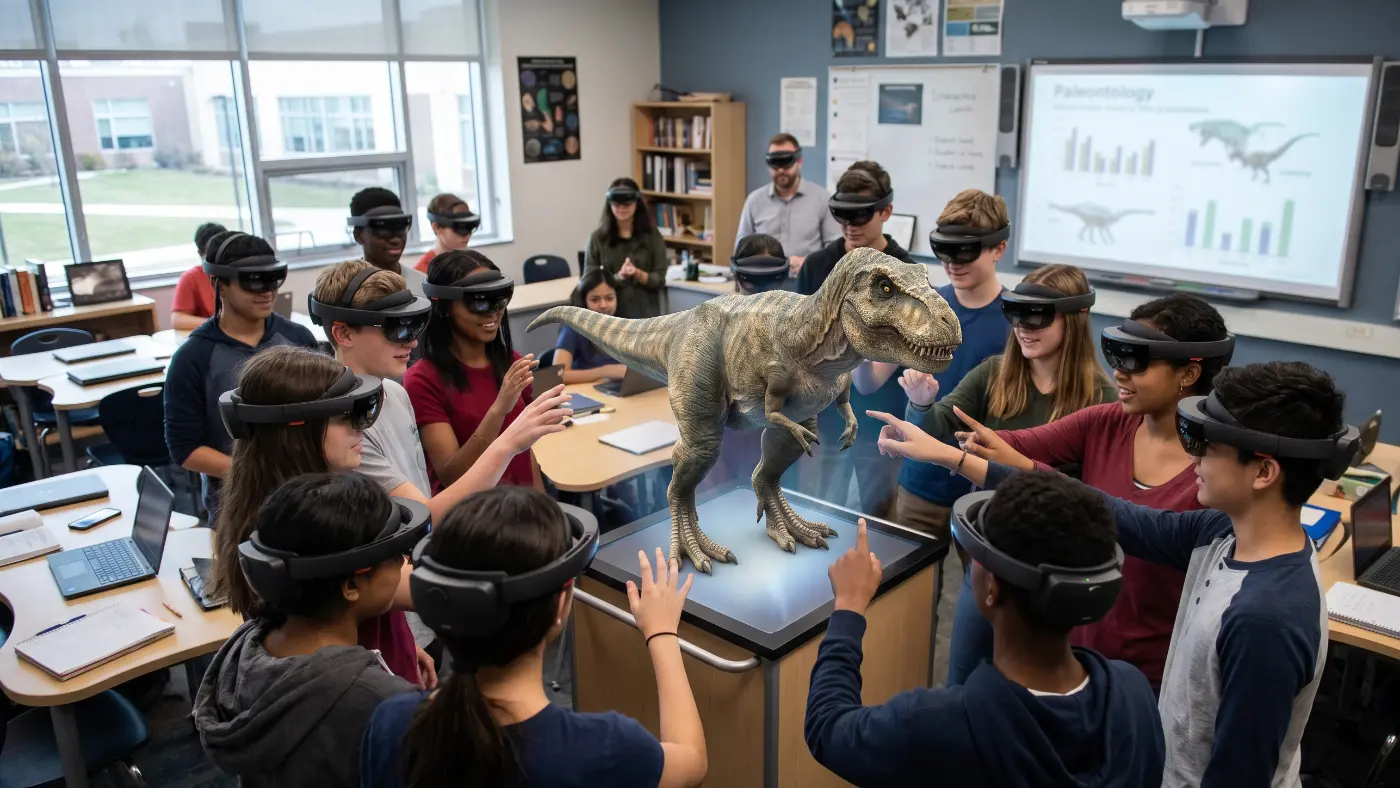
The days of staring at static maps and memorizing textbook dates are officially coming to an end. In 2026, the education sector has embraced Mixed Reality (MR) – a technology that merges virtual elements with the physical classroom – to completely revolutionize how history and science are taught.
From Reading History to Experiencing It
Instead of just reading about ancient Rome, students putting on sleek, lightweight MR glasses can see a 3D hologram of the Colosseum materialize right on their classroom floor. They can walk around it, zoom in on architectural details, and even witness a digital simulation of a Roman senate debate.
Why MR is Winning Over Traditional VR
While Virtual Reality (VR) completely cuts the user off from the real world, Mixed Reality allows students to remain aware of their physical surroundings.
- Collaborative Learning: Students can see each other, interact, and work together on the same digital model.
- Reduced Motion Sickness: By keeping the real world in view, MR eliminates the dizziness often associated with older VR headsets.
- Teacher Control: Educators can guide the experience in real-time from a tablet, pausing the simulation to highlight key educational points.
The Global Rollout
While premium international schools led the charge, 2026 has seen affordable, lightweight headsets entering public school pilot programs across Europe and major Indian metros. The challenge now shifts from hardware costs to content creation – curating curriculum-aligned MR experiences that keep students engaged.