High-speed internet is no longer a luxury; it is a fundamental human right. However, for billions of people in remote villages, island communities, and rural areas, the last mile of fiber-optic cabling is simply too expensive or logistically impossible to build. In 2026, Satellite Internet is finally bridging this gap, promising to connect every corner of the planet. But this connectivity comes with a massive, orbital cost: Space Junk.
The Promise: Connectivity Without Borders
Satellite internet works by deploying thousands of small satellites in Low Earth Orbit (LEO). Because they are much closer to Earth than traditional geostationary satellites, they can provide high-speed, low-latency internet anywhere the sky is visible.
- The Economic Impact: From e-learning in remote villages to digital banking for the rural unbanked, the social mobility enabled by satellite internet is immense.
- Disaster Resilience: When storms or earthquakes knock out terrestrial fiber networks, satellite links remain unaffected, making them the ultimate tool for emergency communications.
The Problem: The Orbital Graveyard
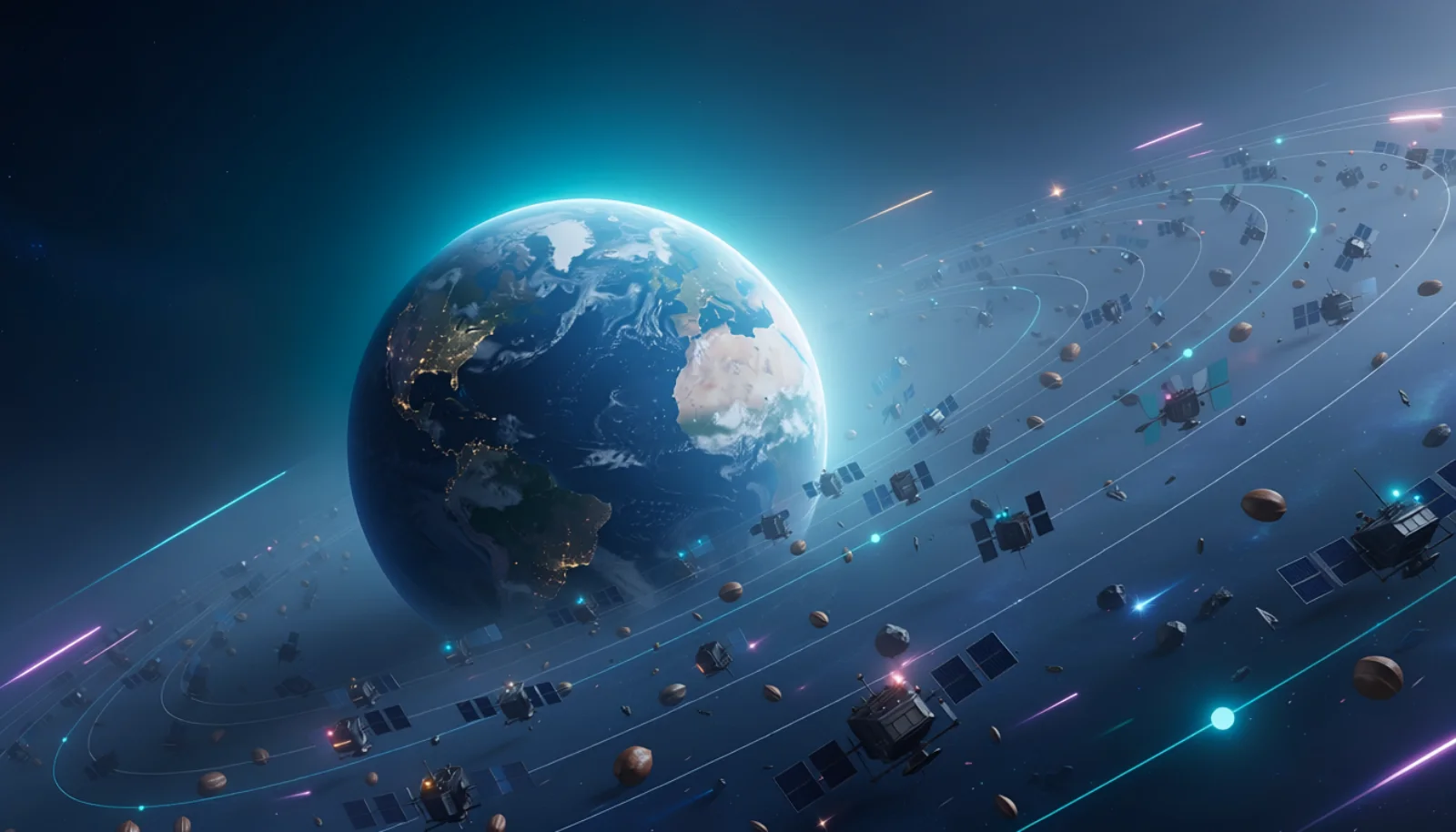
The trade-off is the sheer number of satellites required. We have gone from a few hundred active satellites in orbit to tens of thousands. This has led to two major crises:
1. The Kessler Syndrome
The Kessler Syndrome is a theoretical scenario where the density of objects in LEO becomes so high that a single collision triggers a chain reaction of further collisions, creating a belt of debris that could make space travel and satellite connectivity impossible for generations.
2. The Visibility Problem (Light Pollution)
For astronomers, thousands of satellites crossing the sky every night are effectively ruining the view, making it nearly impossible to observe distant stars or track potentially dangerous near-Earth asteroids.
Solutions for a Sustainable Orbit
The industry is currently scrambling to implement Space Sustainability standards in 2026:
- Automated De-orbiting: New satellites are designed to automatically burn up in the atmosphere at the end of their lifespan.
- On-Orbit Servicing: We are seeing the rise of space tugboats – autonomous robots that can visit old, dead satellites, refuel them, or drag them out of orbit to prevent collisions.
- Space Traffic Management: Just as we have air traffic control, we are developing global, real-time Space Traffic Control systems to manage every single piece of orbital debris and satellite.
Satellite internet is a monumental human achievement, but it reminds us that space is not an infinite resource. If we want the benefits of a globally connected world, we must treat the space around Earth with the same environmental rigor we treat our own planet’s soil and oceans.