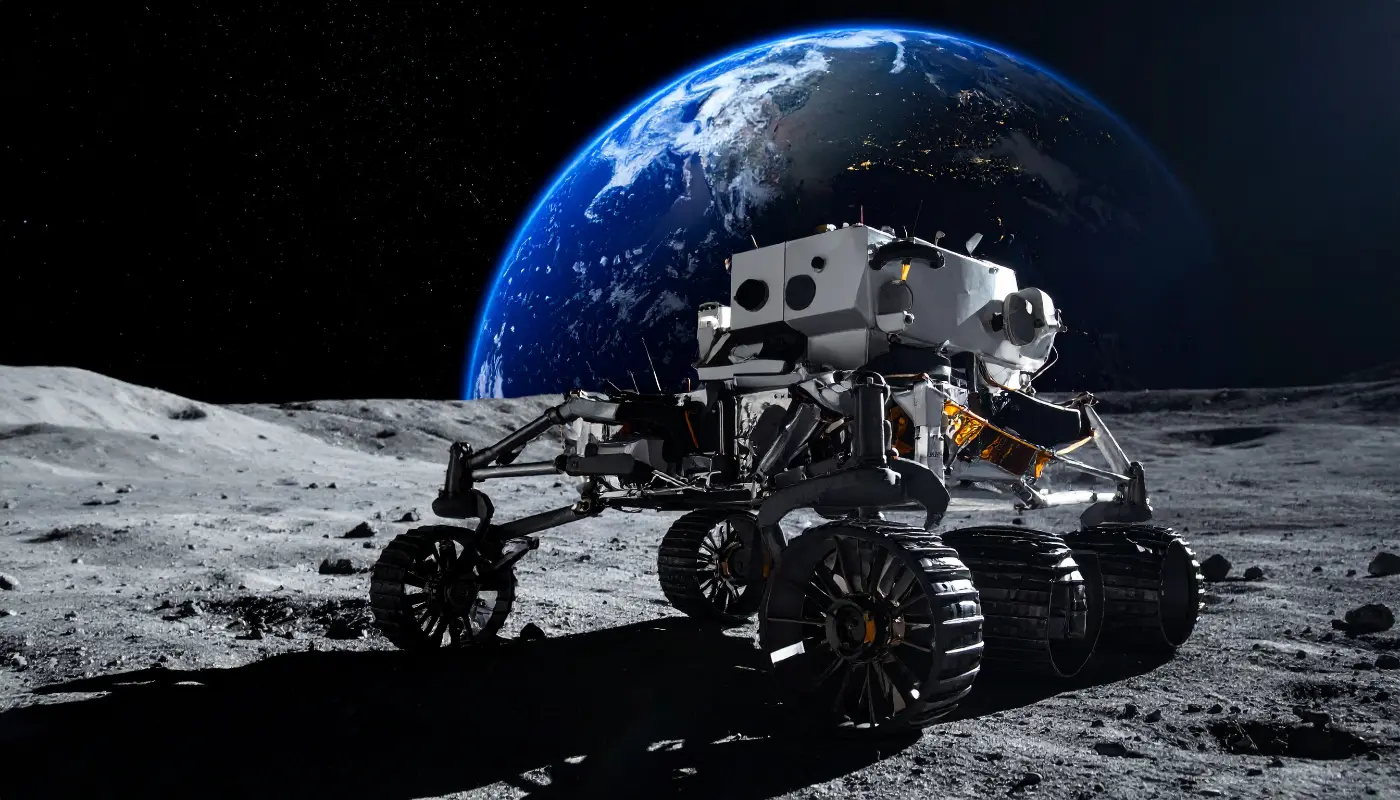
The Moon is no longer just a destination for scientific exploration; it is the next frontier of the global resource economy. With the discovery of vast deposits of Helium-3, rare-earth elements, and water-ice, nations and private companies are racing to establish a presence on the lunar surface. But this raises a fundamental legal question: In the vacuum of space, who owns the wealth beneath the lunar soil?
The Legal Landscape: The Outer Space Treaty
The current legal framework is built on the 1967 Outer Space Treaty (OST), which declares that space is the “province of all mankind” and that no nation can claim sovereignty over any celestial body. However, the OST is notoriously silent on the rights of private companies to extract and sell materials from those bodies.
The “National vs. Private” Distinction
- National Claims: The treaty explicitly prohibits countries from claiming territory.
- Extraction Rights: Many nations, including the US, India, and Luxembourg, have enacted domestic laws asserting that while companies cannot own the Moon, they can legally own the materials they mine from it. This is analogous to international waters: no one owns the ocean, but a fishing company owns the fish it catches.
Why the Race to Mine?
- Helium-3: A rare isotope of helium that is extremely abundant on the Moon and is widely considered the ultimate fuel for future nuclear fusion energy on Earth.
- Water-Ice: Lunar water is the “oil of the space age”. It can be split into hydrogen and oxygen to create rocket fuel, effectively turning the Moon into a “gas station” for missions heading further into the solar system (like Mars).
The Future of Mineral Exchange
As we move into 2026 and beyond, we are seeing the rise of “Mineral Exchanges” specialized in space-derived materials. These regulatory bodies are working to establish standards for mineral grading, sampling, and delivery, ensuring that as lunar mining transitions from “experiment” to “industry,” it happens within a framework of transparency and fair trade.
The question of “who owns the Moon” remains unsettled, but the question of “who owns the wealth on the Moon” is being answered by the first generation of companies to reach it. Just as the deep-sea mining rules required a new international consensus, the lunar mineral rush will be the defining legal and economic challenge of the next decade of space exploration.