
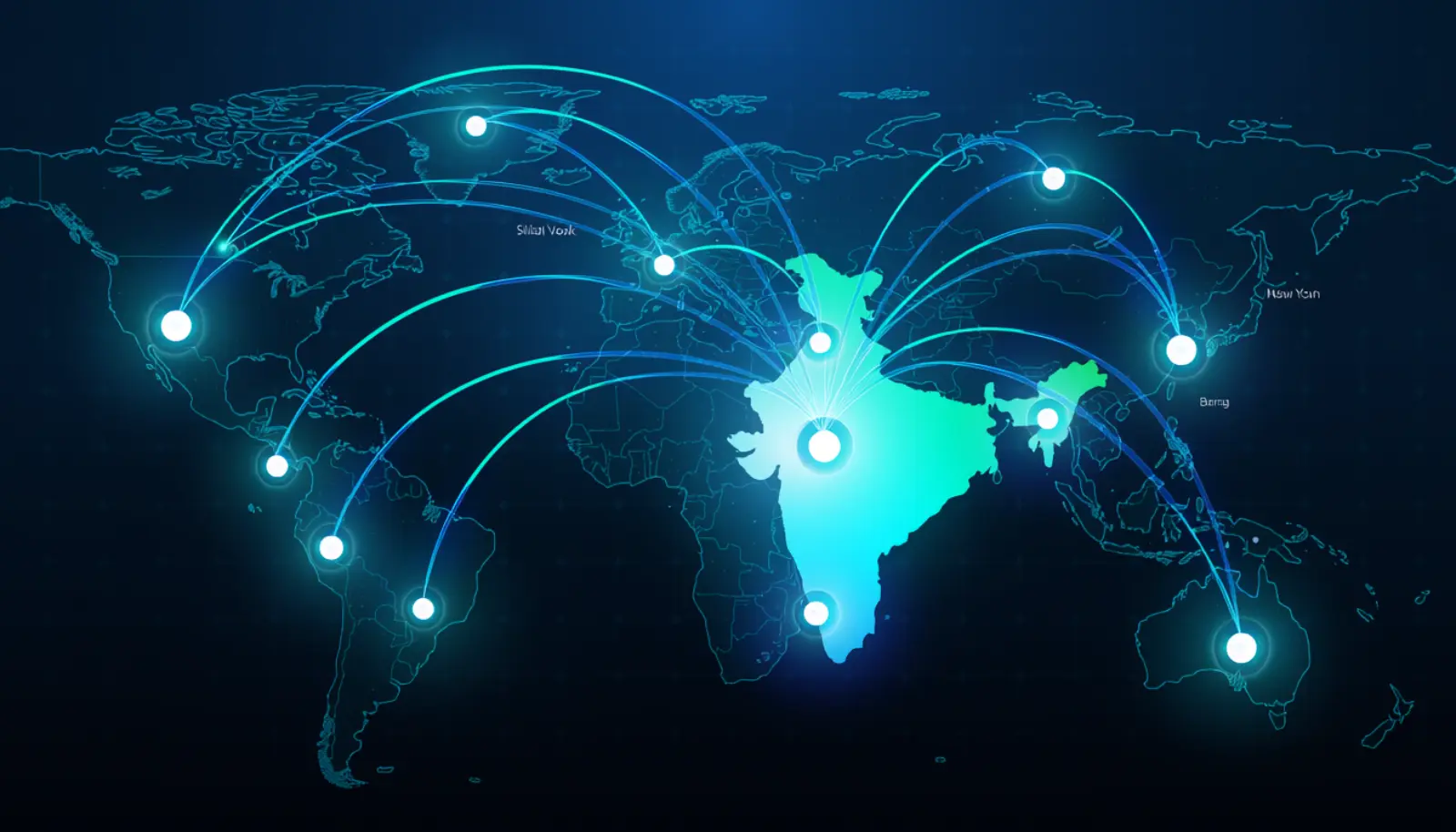
For years, the Indian Startup brand was synonymous with solving India-specific problems. In 2026, the narrative has shifted to “Building for the World”. Indian startups are no longer just capturing the domestic market; they are establishing themselves as global leaders in SaaS, Deep-Tech, and FinTech. But moving from a local hero to a global player is a complex transition that requires a fundamental rethink of strategy.
The India-to-Global (I2G) Framework
Startups that succeed internationally in 2026 share three common characteristics:
1. The Product-First, Location-Agnostic Mindset
The most successful I2G startups operate with a global mindset from Day 1. Their product documentation, compliance standards (GDPR, SOC2), and customer support are built to meet the highest global benchmarks immediately, rather than upgrading them later.
2. Strategic Beachhead Markets
Don’t try to conquer the entire world at once. The most effective strategy is choosing a Beachhead – a market (e.g., Southeast Asia, the Middle East, or select US states) where the competitive landscape is similar to India, allowing you to validate your model before scaling further.
Challenges to Global Integration
- Trust and Credibility: Global customers are cautious of new brands. Indian startups must lean into certifications, awards, and testimonials from existing multinational clients to prove their stability.
- Regulatory Complexity: Each country has different tax laws, data sovereignty requirements, and labor regulations. Scaling globally requires a massive investment in legal infrastructure.
Why 2026 is the Turning Point
The global perception of Indian Tech has reached an all-time high. The success of India’s Digital Public Infrastructure (UPI, ABDM) has convinced international decision-makers that India is not just a destination for low-cost labor, but a hub for high-end, scalable technological innovation.
Indian startups are currently in the Goldilocks zone: they have the engineering brilliance of Silicon Valley and the cost-efficiency of emerging economies. By combining this with a disciplined, global-first compliance approach, Indian founders are positioned to capture a massive share of the global digital economy over the next decade.