
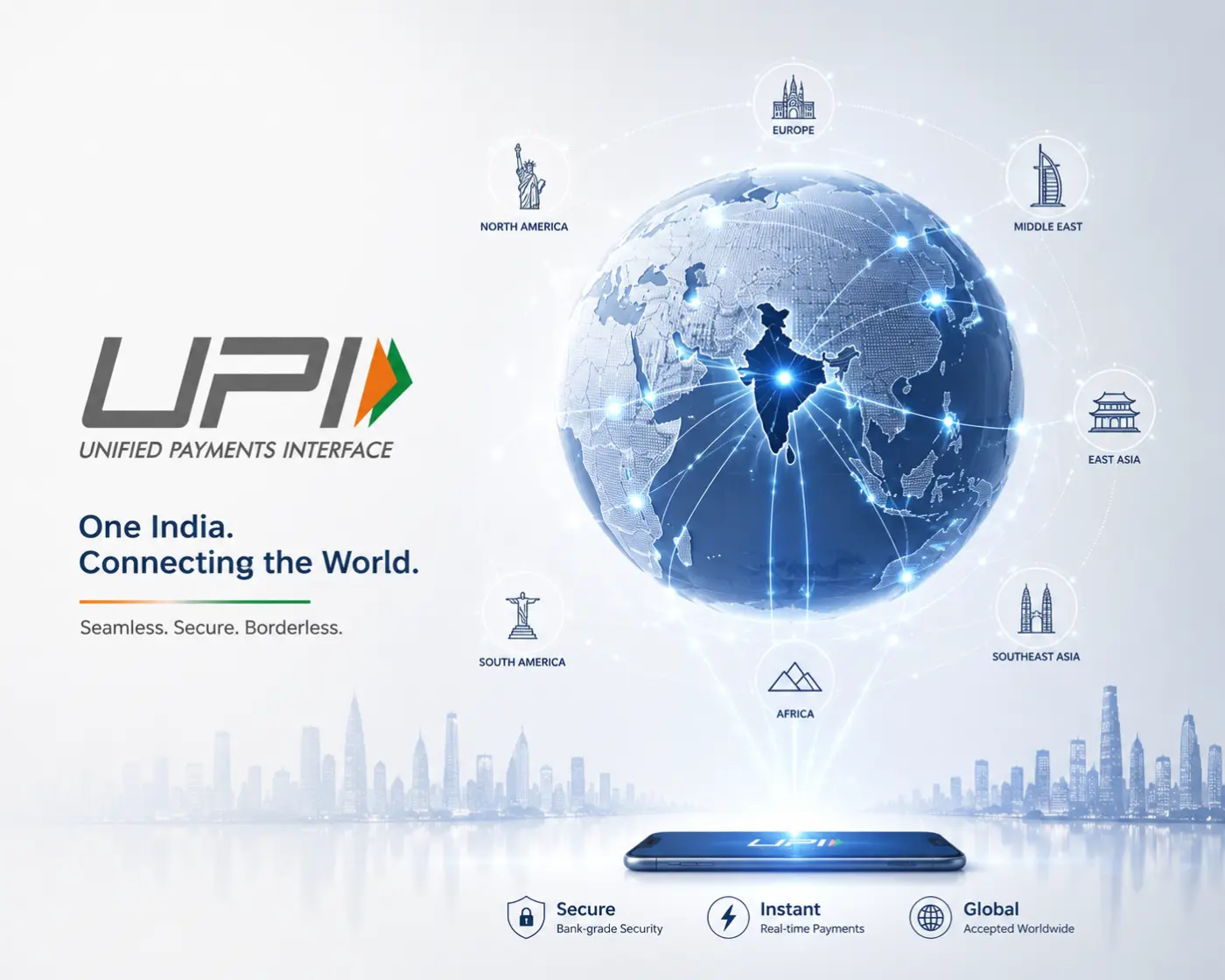
India’s Unified Payments Interface (UPI) is no longer just a national success story; it is the gold standard for global Digital Public Infrastructure (DPI). As countries worldwide struggle to digitize their financial systems without creating proprietary monopolies, they are looking to the “India Stack” to understand how to build systems that are inclusive, scalable, and secure.
The DPI Philosophy: Open, Scalable, Secure
The core of India’s success with UPI was a radical departure from the “walled garden” approach of tech giants. UPI was designed as an open protocol, meaning that any bank, fintech startup, or government entity could build applications on top of it.
- Interoperability: It didn’t matter if you used an HDFC account or an SBI account; the interface remained identical for the user.
- Cost Efficiency: By eliminating the high transaction fees typically charged by global card networks, UPI brought the cost of digital payments effectively down to zero for the end-user.
Lessons for Global Adoption
As the world looks toward India, several key lessons have emerged for other nations planning their own DPI journeys.
1. Build for the “Last Mile”
Many global systems are built for the urban elite with fast internet and high-end smartphones. UPI succeeded because it was designed for the “last mile” – it works over low-bandwidth cellular networks and is built into the most basic feature phones, ensuring true financial inclusion.
2. Private Innovation on Public Rails
The government didn’t try to build the ultimate consumer app. Instead, they built the “rails” and invited private companies (like Google, PhonePe, and Paytm) to build the “trains.” This encouraged private innovation and competition, leading to an incredibly rapid rollout.
The Future of DPI Beyond Finance
The UPI model is now being replicated in other sectors. DPI is the new blueprint for development.
- Health Stack: Digitizing patient records to allow seamless, portable medical history across all Indian hospitals.
- Logistics Stack: Digitizing supply chains to reduce the cost of moving goods across the country.
India has proven that Digital Public Infrastructure is not just a technical project; it is an economic powerhouse. By prioritizing openness and scalability over proprietary control, India has provided the world with a masterclass in how to digitize an entire nation without leaving anyone behind.