Every year on July 26, the heart of India beats with deep gratitude, solemn pride, and national unity. As the nation observes the 27th anniversary of Kargil Vijay Diwas in 2026, citizens, veterans, and military leaders gather to pay homage to the extraordinary courage, unyielding resilience, and supreme sacrifices of the Indian Armed Forces. On this historic day in 1999, India successfully concluded Operation Vijay, driving out hostile infiltrators who had surreptitiously occupied high-altitude strategic outposts along the Line of Control (LoC) in the ice-bound heights of Ladakh.
From the frozen, windswept peaks of Dras, Batalik, and Kaksar to the National War Memorial in New Delhi, the memory of 527 bravehearts who laid down their lives echoes across the country. Kargil Vijay Diwas is not merely a commemoration of a military victory; it stands as a timeless testament to India’s unwavering sovereignty, territorial integrity, and the invincible spirit of its defenders.
Kargil Vijay Diwas History: The Genesis of the 1999 Conflict
Understanding the profound depth of Kargil Vijay Diwas history requires revisiting the fraught geopolitical and military landscape of the spring of 1999. Months prior to the outbreak of hostiles, India and Pakistan had signed the historic Lahore Declaration in February 1999, aimed at fostering peace, mutual trust, and bilateral stability between the two nuclear-armed neighbors.
However, while diplomatic dialogues were underway, the Pakistani military secretly launched a covert, high-altitude intrusion code-named Operation Badr. Exploiting the harsh winter months when both nations traditionally vacated their un-tenable high-altitude outposts, enemy troops and state-sponsored paramilitary irregulars surreptitiously crossed the Line of Control (LoC). They occupied over 130 to 200 square kilometers of vacant Indian tactical posts perched atop mountain ridges at staggering elevations ranging between 15,000 and 18,000 feet.
The Strategic Threat to National Highway 1 (NH-1)
The enemy’s strategic objective was far-reaching and dangerous. By capturing the dominating peaks overlooking National Highway 1 (NH-1A) – the vital lifeline connecting Srinagar to Leh – the infiltrators sought to interdict Indian supply lines, cut off Ladakh from the Kashmir Valley, and force India into renegotiating border boundaries under duress.
The intrusion was first alerted in early May 1999 by local nomadic Bakarwal shepherds who noticed armed, non-uniformed personnel digging bunkers on the heights of Banju in the Batalik sector. Initial Indian Army patrols sent to inspect the area were ambushed, confirming that the infiltration was not a localized border skirmish, but a massive, well-entrenched, state-directed military invasion.
Tri-Services Synergy: Operation Vijay, Safed Sagar, and Talwar
In response to the unprecedented threat, the Indian state mobilized its armed forces in a masterclass of joint military operations. The counter-offensive was designated Operation Vijay by the Indian Army, supported seamlessly by the Indian Air Force and the Indian Navy.
- The Indian Army (Operation Vijay): Infantry soldiers from elite regiments – including the Jammu and Kashmir Rifles, Gorkha Rifles, Grenadiers, Rajputana Rifles, and Jat Regiment – spearheaded relentless uphill assaults against fortified enemy bunkers, enduring freezing temperatures as low as -40°C and heavy direct artillery fire.
- The Indian Air Force (Operation Safed Sagar): The IAF executed the first-ever high-altitude close air support operations in military history. Operating Mirage-2000, MiG-21, and MiG-27 jets at elevations exceeding 20,000 feet, IAF pilots deployed laser-guided munitions to pulverize enemy supply depots and fortified ridge-top bunkers on peaks like Tiger Hill.
- The Indian Navy (Operation Talwar): The Indian Navy deployed its Eastern and Western Fleets to the North Arabian Sea under Operation Talwar, executing a strategic maritime choke. This posture threatened a naval blockade of Pakistan’s primary oil trade routes, severely restricting the enemy’s fuel reserves and operational endurance.
Turning the Tide: Legendary Battles of Kargil
Reclaiming vertical cliffs held by well-entrenched positions required unimaginable courage, tactical ingenuity, and massive artillery preparation. Over 250 Bofors 155mm howitzers and field guns fired tens of thousands of shells in direct-firing roles, providing crucial cover for infantry platoons crawling up 80-degree razor-sharp rock faces under the cover of night.
1. The Capture of Tololing (June 13, 1999)
The Battle of Tololing was the decisive turning point of the war. Sitting directly over NH-1, Tololing had repulsed several early assaults. On the cold night of June 13, after weeks of intense hand-to-hand combat, the 2 Rajputana Rifles secured the peak, proving that the enemy could be evicted from the highest ridges.
2. The Assault on Tiger Hill (July 4, 1999)
Standing at an imposing 16,608 feet, Tiger Hill was the most prominent enemy stronghold overlooking Dras. In a daring multi-directional assault involving 18 Grenadiers, 8 Sikh, and High Altitude Warfare experts, Indian soldiers climbed sheer vertical cliffs to surprise the enemy from the rear, hoisting the Indian Tricolour atop the peak after an 11-hour brutal battle.
3. Point 4875 (Batra Top)
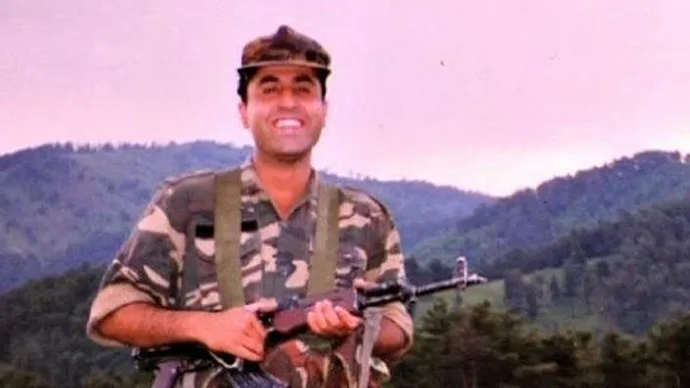
Point 4875, located in the Dras sector, was vital for clearing the enemy’s line-of-sight artillery observation posts over the national highway. The fierce battle saw legendary heroism and heavy hand-to-hand fighting, culminating in the complete liberation of the peak, later renamed Batra Top in honor of Captain Vikram Batra.
On July 26, 1999, after nearly 84 days of intense combat, the Indian Armed Forces formally declared all occupied positions successfully reclaimed, marking the total success of Operation Vijay.
Immortal Legends: The Param Vir Chakra Bravehearts
The triumph of Kargil was written in the blood, sweat, and valor of young officers and soldiers. Four extraordinary bravehearts were awarded India’s highest wartime gallantry award, the Param Vir Chakra (PVC), for unthinkable heroism:
| Hero & Rank | Unit | Key Battle & Feat | Status |
| Captain Vikram Batra | 13 JAK Rifles | Recaptured Point 5140 (“Yeh Dil Maange More!”) and sacrificed his life while saving a fellow officer at Point 4875. | Posthumous |
| Lt. Manoj Kumar Pandey | 1/11 Gorkha Rifles | Led daring night assaults at Khalubar Ridge in Batalik, clearing four enemy positions despite lethal bullet wounds. | Posthumous |
| Grenadier Yogendra Singh Yadav | 18 Grenadiers | Scaled a 1,000-foot vertical ice cliff at Tiger Hill, taking 15 bullet wounds while destroying three enemy bunkers. | Living Legend |
| Rifleman Sanjay Kumar | 13 JAK Rifles | Charged an enemy machine-gun nest at Flat Top (Point 4875), killing three intruders in hand-to-hand combat. | Living Legend |
“Either I will come back after hoisting the Tricolour, or I will come back wrapped in it, but I will be back for sure.”
– Captain Vikram Batra, Param Vir Chakra
The 27th Kargil Vijay Diwas Celebrations (2026)
As India marks 27 years of victory in 2026, nationwide commemorations are being organized under the aegis of the Ministry of Defence and the Indian Army to honor fallen heroes and inspire future generations.
1. The Shaurya Vijay Yatra 2026
On July 14, 2026, Raksha Mantri Rajnath Singh flagged off the 13-day ‘Shaurya Vijay Yatra’, a 1,900-kilometer motorcycle expedition from the National War Memorial in New Delhi to the Kargil War Memorial in Dras, Ladakh. Comprising 28 riders – including serving and retired military personnel and family members – the expedition carries an urn filled with sacred soil from the National War Memorial to be offered at the foot of Tololing in Dras.
2. Dras Memorial Outreach & Wreath Laying
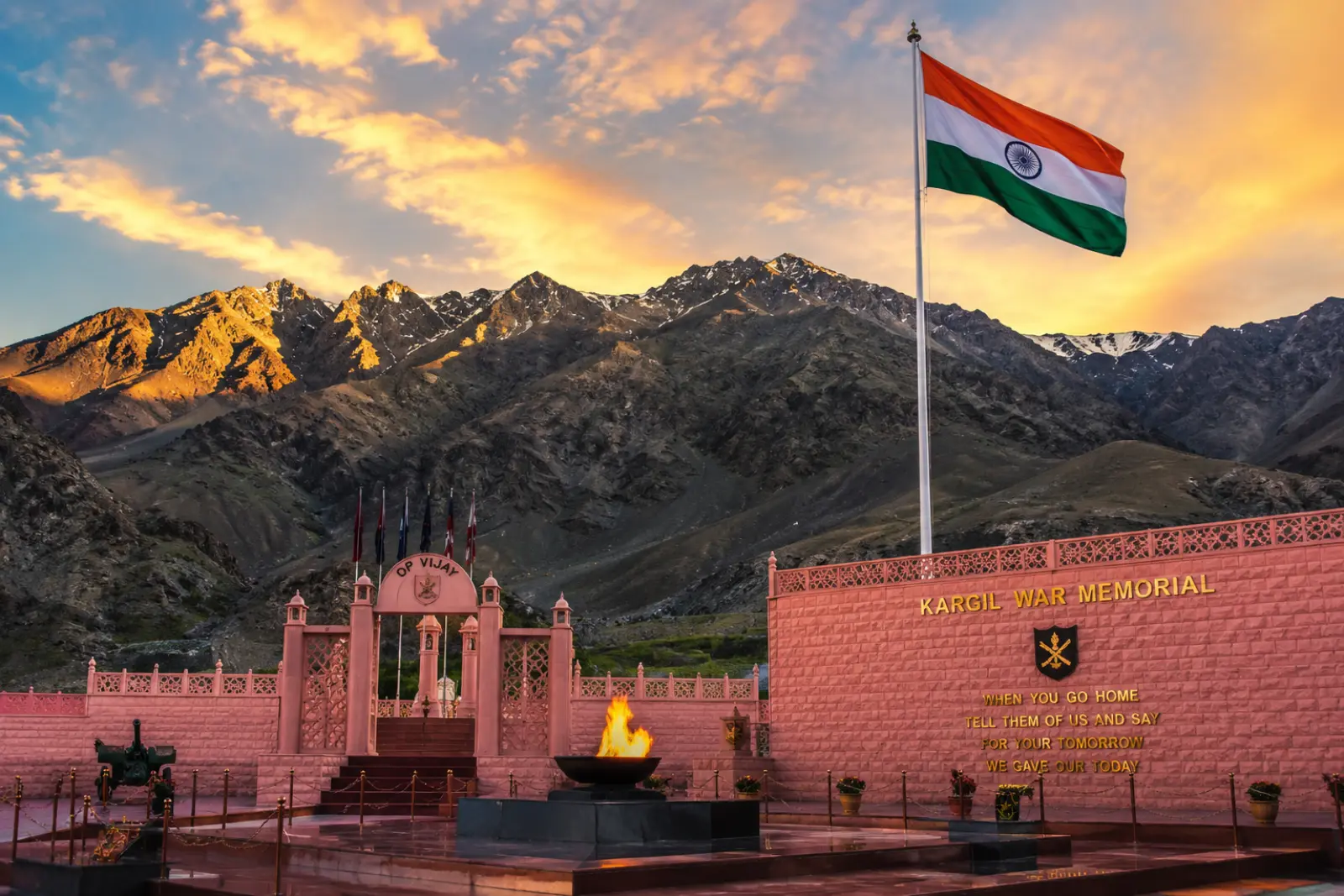
The primary national ceremony takes place at the historic Kargil War Memorial in Dras, situated along NH-1 beneath the shadow of Tiger Hill. Defense leaders, war veterans, and Veer Naris (war widows) gather before the pink sandstone wall bearing the names of all 527 martyrs carved in gold. Meanwhile, the Prime Minister pays homage at the National War Memorial in New Delhi.
An Enduring Symbol of National Security & Unity
The legacy of Kargil Vijay Diwas extends far beyond a historical date on the calendar. It serves as a continuous reminder of the vigilance, professionalism, and sacrifice required to defend a nation’s freedom. The lessons learned from Kargil fundamentally transformed India’s defense architecture – leading to major modernizations in high-altitude equipment, joint operational commands, satellite surveillance, and border infrastructure.
As the Tricolour flutters high above the peaks of Ladakh, every citizen pauses on July 26 to offer a heartfelt salute to the brave men and women of the Indian Armed Forces who ensured that our tomorrow remains safe through their today. Jai Hind! Vande Mataram!