
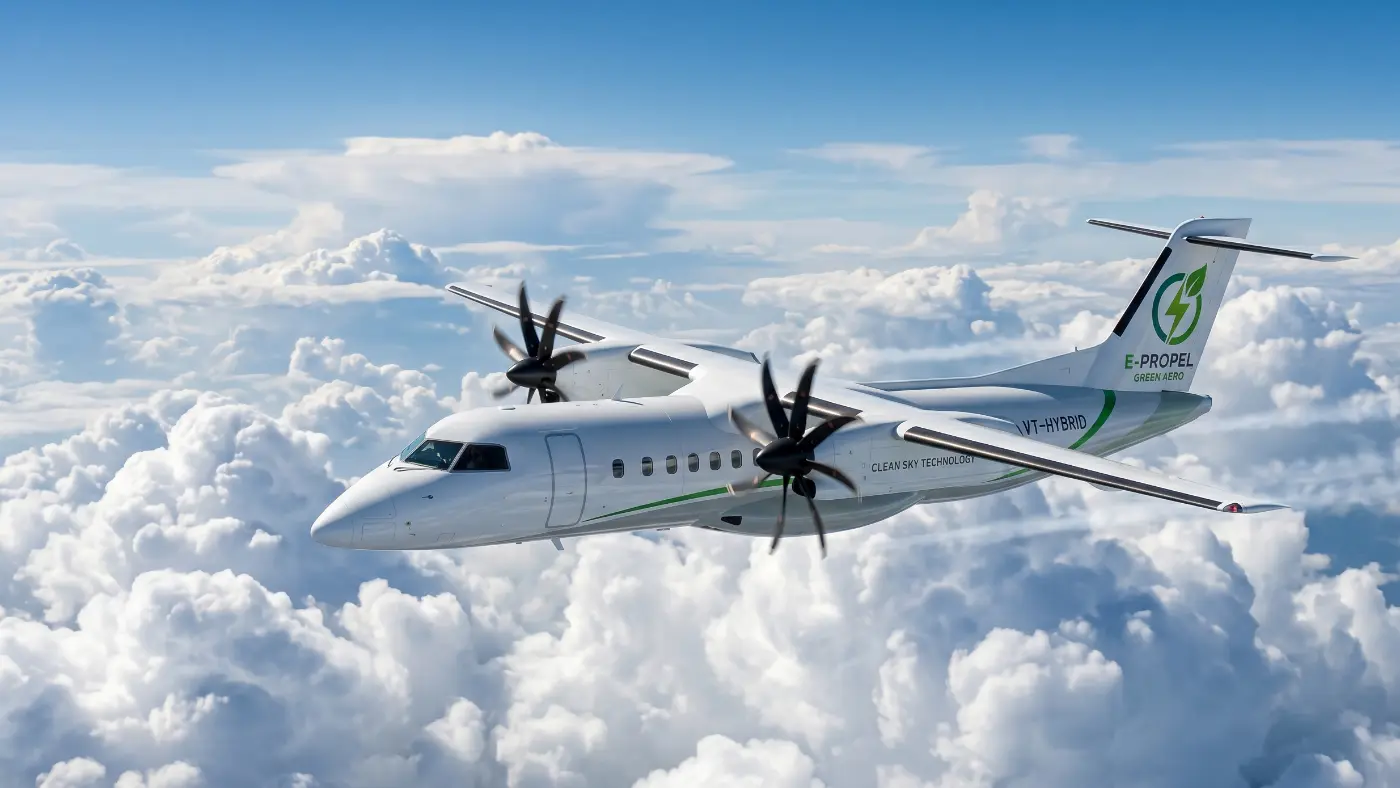
The aviation industry has long been pinned as one of the hardest sectors to decarbonize. While electric cars and battery-powered trains have taken over ground transportation, the immense weight of traditional lithium batteries has made battery-powered commercial flight an engineering impossibility. However, a major milestone has rewritten the future of air travel: the first successful regional commercial flight powered entirely by liquid hydrogen.
Breaking the Weight Barrier
The core challenge of electric aviation has always been energy density. To lift a commercial airliner into the sky, the required lithium batteries would weigh more than the airplane itself. Liquid hydrogen completely bypasses this limitation.
Hydrogen has an energy density by mass that is nearly three times higher than conventional jet fuel, and more than a hundred times higher than current battery tech. By utilizing lightweight carbon-fiber storage tanks, engineers have successfully built propulsion systems capable of carrying passengers without sacrificing range.
Fuel Cells vs. Direct Combustion
The race for clean skies is currently divided into two innovative pathways:
- Hydrogen Fuel Cells: This method uses hydrogen to generate electricity mid-flight via a chemical reaction, which then powers electric propellers. This system is completely silent and releases nothing but pure water vapor.
- Direct Hydrogen Combustion: Modified traditional jet engines burn liquid hydrogen directly in a combustion chamber. While this produces minor nitrogen oxides ($NO_x$), it delivers the massive thrust required for long-haul, wide-body aircraft.
The Infrastructure Hurdle
While the technology in the air is proven, the true battleground lies on the ground. Hydrogen requires cryogenic storage, meaning airports worldwide must completely redesign their fueling infrastructure to store fuel at a bone-chilling -253°C.
Despite these logistical challenges, major aerospace companies are rapidly converting their regional manufacturing lines, signaling that zero-emission skies are no longer a distant dream.