
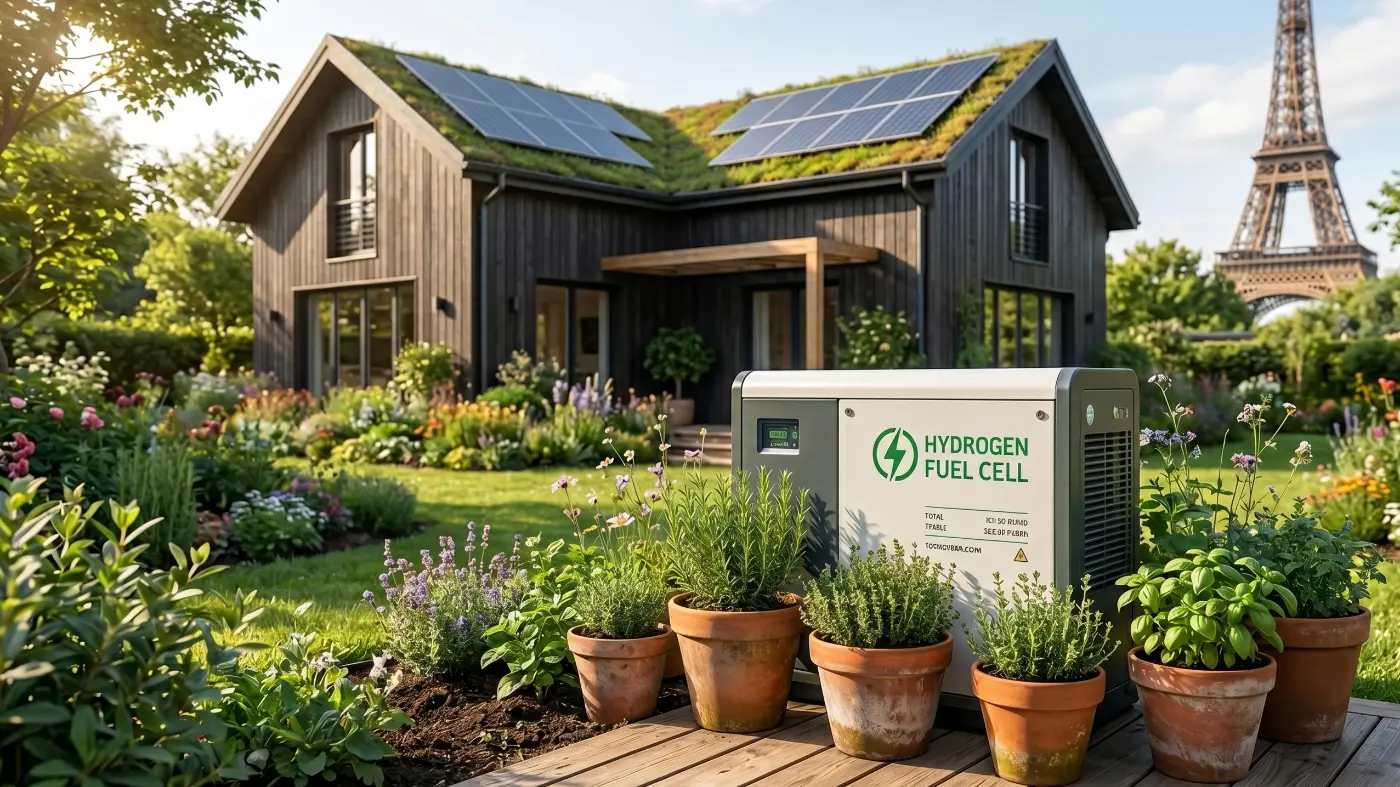
As the world pushes toward net-zero, the “Solar + Battery” combo is facing a new challenger in 2026: Residential Green Hydrogen. While solar panels remain a staple, homeowners are increasingly looking at compact hydrogen fuel cells to provide true off-grid independence and seasonal energy storage.
How It Works: The “Water-to-Watt” Process
Unlike traditional lithium batteries that store electricity, home hydrogen systems use an electrolyzer to split water into hydrogen and oxygen using excess solar power during the day. The hydrogen is stored in a safe, low-pressure tank. When the sun goes down or winter hits, a fuel cell reconverts that hydrogen back into electricity and heat.
Why Hydrogen is Gaining Traction in 2026
- Infinite Storage: Unlike batteries that lose charge over time (leakage), hydrogen can be stored for months without losing energy.
- Heat as a Byproduct: Fuel cells generate heat during the conversion process, which can be used for domestic hot water or space heating, reaching up to 90% system efficiency.
- No Degradation: While lithium batteries lose capacity after several years of cycles, hydrogen storage tanks and fuel cells can last 20+ years with minimal maintenance.
The Cost Factor
In 2026, the primary barrier remains the initial setup cost. However, government “Green Home” subsidies in the EU and North America are bringing the price point closer to high-end battery systems, making it a viable luxury for early adopters.