
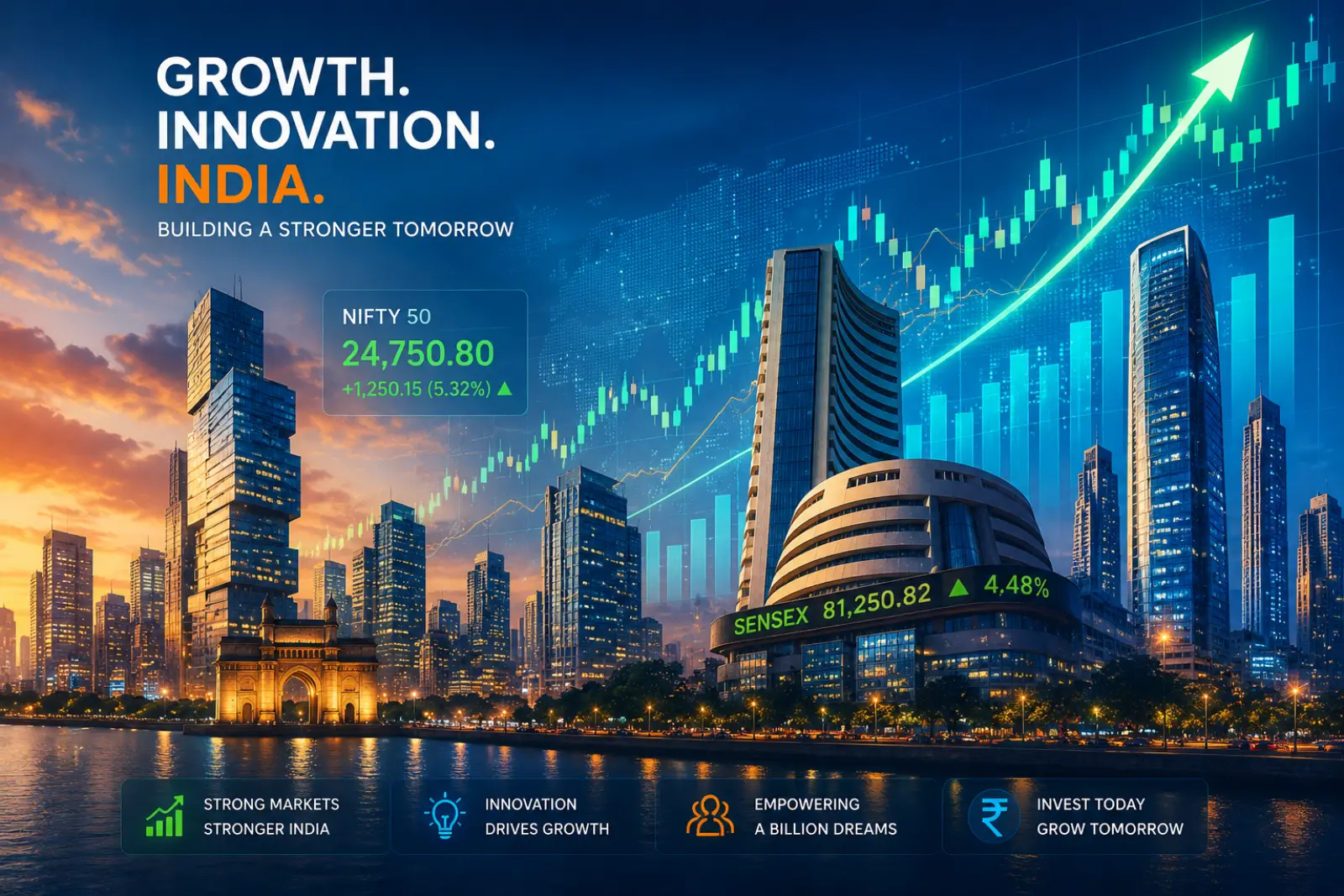
India’s venture capital (VC) ecosystem has entered its most mature phase yet. In the early 2020s, the market was defined by “growth-at-all-costs” strategies. In 2026, the sentiment has shifted toward “Sustainable Scalability”. Investors today are less interested in rapid user-acquisition numbers and are laser-focused on unit economics, clear paths to profitability, and proprietary technological moats.
The Shift to Deep-Tech
The most significant trend this year is the massive inflow of capital into Deep-Tech. Investors have realized that low-barrier-to-entry apps have become saturated. Instead, the “next unicorn” is likely to emerge from fields that require heavy R&D, such as:
- Semiconductor Design: Capitalizing on the India Semiconductor Mission.
- Space-Tech: Launching cost-effective satellites and infrastructure.
- Synthetic Biology: Developing lab-grown proteins and advanced biopharmaceuticals.
Quality Over Quantity: The “Flight to Quality”
The “spray-and-pray” investment approach is effectively dead. VCs are now performing rigorous due diligence that rivals public-market analysis.
What VCs Are Looking For Today
- Proprietary Data Moats: Does the startup have a unique dataset that is impossible for competitors to replicate?
- Defensible Technology: Is the solution built on core IP, or is it merely a wrapper around an existing third-party API?
- Founder Resilience: With the market becoming more demanding, investors are prioritizing founders with a long-term vision who have proven the ability to survive multiple economic cycles.
The Rise of Industry-Specific Funds
We are seeing a move away from “generalist” VC firms. Instead, specialized funds dedicated strictly to Fintech, Agri-Tech, or Climate-Tech are gaining traction. These funds offer not just capital, but “Operating Expertise” – a deep bench of former founders and industry specialists who provide the startups with mentorship, regulatory guidance, and strategic B2B connections.
For entrepreneurs, this means the fundraising process has become more demanding but also more rewarding. If you can prove your unit economics and demonstrate a real-world utility, capital is more available than ever – but the era of “easy money” is gone, replaced by a sophisticated, strategic investment climate that rewards discipline and genuine innovation.