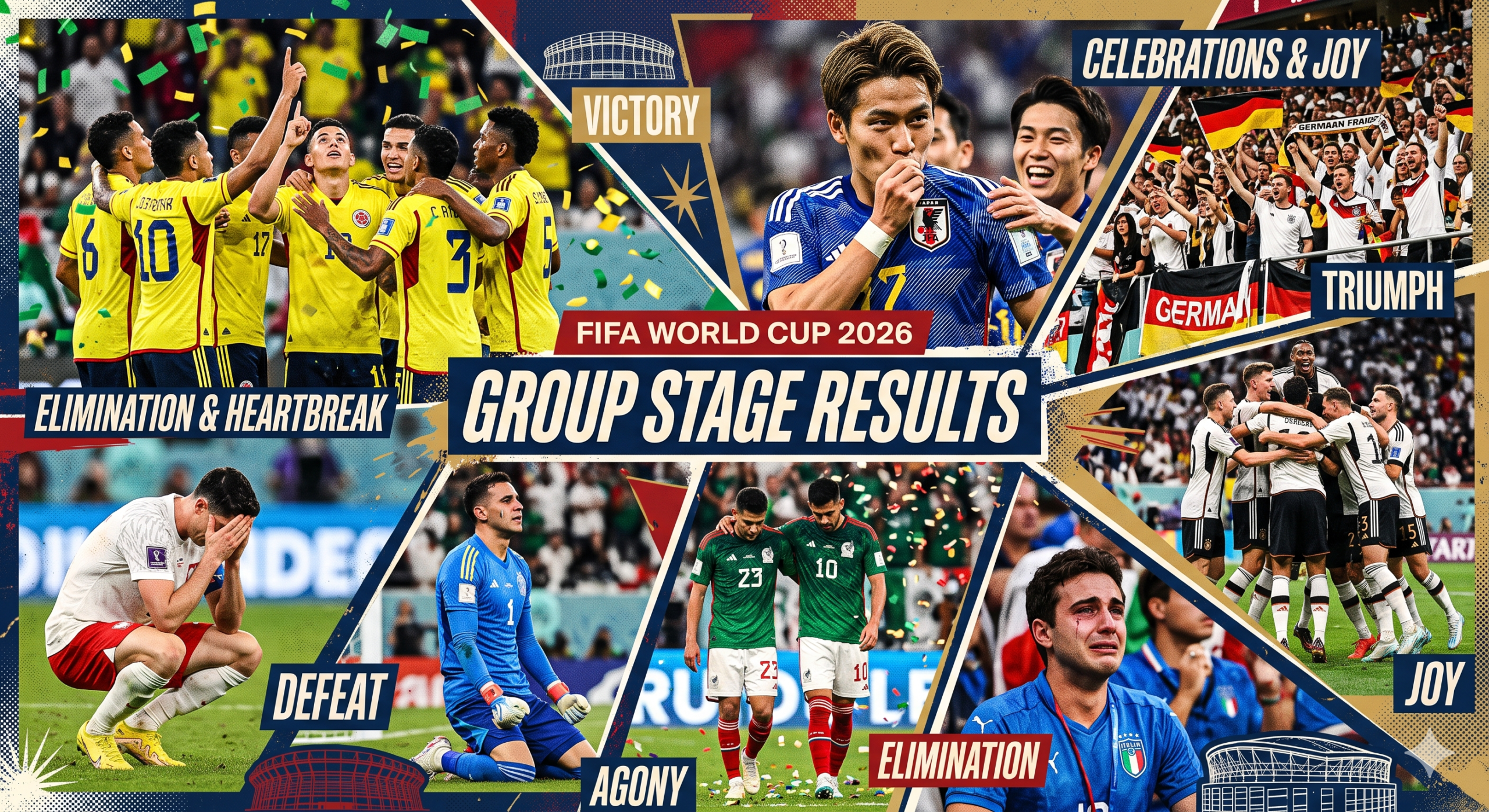
Sixteen days. Seventy two matches. Forty eight nations reduced to thirty two. The group stage of the first 48 team FIFA World Cup is finally complete, and it has delivered on every promise the expanded format made when FIFA first announced it. More matches. More upsets. More heartbreak. More history.
From a teenager scoring on his full World Cup debut in front of his own family, to a 600 person nation holding the European champions to a goalless draw, to a 38 year old becoming the greatest goalscorer the tournament has ever seen, this group stage will be remembered as one of the most dramatic opening acts in the competition’s 96 year history.
Before the Round of 32 begins tomorrow at Los Angeles Stadium, here are the five biggest stories that defined the first phase of the FIFA World Cup 2026, along with a complete picture of who advances, who goes home, and what the new knockout bracket actually looks like.
| WHAT YOU NEED TO KNOW | |
| The group stage ran from June 11 to June 27, 2026, across 72 matches in 16 stadiums and three host nations. | |
| 32 teams advance to the Round of 32: the top two from all 12 groups, plus the eight best third placed teams. | |
| The Round of 32 begins June 28 at Los Angeles Stadium and runs through July 3. | |
| Lionel Messi finished the group stage as the outright all time leading World Cup goalscorer in history. | |
Story 1: Messi Becomes the Greatest World Cup Goalscorer of All Time
Some records get broken quietly. This one was not one of them. On June 22 at AT&T Stadium in Arlington, Lionel Messi scored twice against Austria to reach 18 career World Cup goals, surpassing Miroslav Klose’s previous all time record of 16. He did it on his 200th appearance for Argentina, having scored a hat trick against Algeria in the opening match just six days earlier, a performance that made him the oldest player in World Cup history to score multiple goals in a single match, eclipsing a record held by Cameroon’s Roger Milla since 1994.
To put the scale of what Messi achieved across these three matches into context, he arrived at this World Cup level with Klose on 16 goals. He left the group stage with 18, a tally built in barely a week of football at 38 years of age, an age at which most outfield players in World Cup history have already retired from international competition entirely.
Argentina topped Group J comfortably, and Messi’s tournament now continues into a knockout bracket that could yet add to a number that already looks unassailable. Whatever happens from here, the conversation about football’s greatest ever goalscorer at the World Cup has been definitively settled.
| 18 Messi World Cup Goals | 16 Previous Record (Klose) | 38 Messi’s Age |
Story 2: Cape Verde’s Fairytale Refuses to End
Nobody expected much from the third smallest nation by population ever to qualify for a World Cup. Cape Verde, representing roughly 600,000 people, were drawn into Group H alongside Spain, Uruguay and Saudi Arabia and given little to no chance of causing problems for any of them.
Instead, Cape Verde held the reigning European champions to a goalless draw in the tournament’s biggest shock to that point, with 40 year old goalkeeper Vozinha producing one of the great individual World Cup performances to deny Spain across 27 shots. They followed it by holding Uruguay to a 2-2 draw, Kevin Pina’s rocket of a free kick giving them a shock lead before Uruguay battled back, only for Helio Varela to level things again in the second half.
Two points from two of the tournament’s most difficult fixtures left Cape Verde with a genuine, realistic path into the Round of 32 heading into their final match against Saudi Arabia, a scenario that looked like pure fantasy when the draw was made.
| Cape Verde will feel they now have a real chance to make the last 32 in a massive upset. Source: Yahoo Sports, reporting on Cape Verde’s draw with Uruguay |
Story 3: Spain’s Stuttering Start Becomes a Statement
Spain’s tournament began with genuine alarm. The goalless draw with Cape Verde, in which La Roja registered 27 shots and could not find a single goal, raised real questions about whether the European champions had the conviction to match their undoubted quality. Luis de la Fuente’s admission afterwards that his side lacked freshness and a clinical edge did little to settle nerves back home.
What followed was one of the most emphatic responses of the entire group stage. Spain demolished Saudi Arabia 4-0 in Atlanta, with 18 year old Lamine Yamal scoring his first World Cup goal inside ten minutes of his first start of the tournament, having recovered from the hamstring problem that limited him to a substitute appearance against Cape Verde. Mikel Oyarzabal added two more either side of that opener, and an own goal completed the rout, with both Yamal and Oyarzabal withdrawn at half time as De la Fuente managed his squad for the matches still to come.
Yamal’s own words afterwards captured the emotional weight of the moment. Scoring his first World Cup goal with his mother and family watching from the stands was, in his telling, a dream realised after watching the 2022 tournament from his school classroom as a young teenager. Spain finished the group stage looking every bit like the favourites their pre tournament ranking suggested, the Cape Verde stumble recast as a wake up call rather than a warning sign.
Story 4: Egypt and Mohamed Salah End a Long Wait
Egypt’s World Cup history before this tournament made for difficult reading. Three previous appearances, eight matches played, zero wins recorded. That changed on June 21 in Vancouver, when Mohamed Salah, playing in what is expected to be one of his final seasons at the top of the European game, drove Egypt to a stunning 3-1 comeback win over New Zealand.
Salah scored Egypt’s second goal himself before turning provider, setting up Trezeguet’s header from a corner to seal the victory in the 82nd minute. It was Egypt’s first ever World Cup win in four tournament appearances, a genuinely historic achievement that had been 92 years in the making since their first appearance at the 1934 World Cup.
The result, combined with a draw against Belgium in their opener, put Egypt firmly in contention to advance from Group G, a group that had been dismissed by many pre tournament previews as a straightforward path for the Belgians.
Story 5: Germany’s Redemption and the Substitute Who Changed Everything
Germany arrived at this World Cup carrying the weight of two consecutive group stage exits in 2018 and 2022, a run of underachievement that had become a genuine crisis for one of football’s most historically successful nations. The redemption arc began emphatically with a 7-1 demolition of Curacao in the opener, but it was the manner of their Matchday 2 win that defined their tournament.
Ivory Coast led at half time in Toronto through Franck Kessie’s clinical finish, and Germany looked toothless after seeing two efforts controversially disallowed for fouls. Julian Nagelsmann’s response was a triple substitution at the hour mark that completely transformed the match. Deniz Undav, a player who managed only five goals in 22 Premier League appearances during his time at Brighton, scored twice from the bench, the second arriving in the 94th minute, to send Germany through to the Round of 32 with a game to spare.
It was, in pundit Gary Neville’s words, simply what Germany do, finding a way to win even when struggling. Undav’s tournament tally now stands at nine goals in eleven international appearances, an extraordinary record for a player who only made his senior international debut two years ago at the age of 27.
| They’ve ruined my life on multiple occasions. You’ve got to hand it to Germany there. They were struggling in parts of that match. They stuck at it, persistence, resilience, and they got there in the end. Source: Gary Neville, speaking on ITV after Germany’s win over Ivory Coast |
The Full Picture: Who Advances and Who Goes Home
With all 72 group stage matches now complete, here is the confirmed picture of who advances to the Round of 32, structured by how each group resolved itself.
Final Group Stage Standings | All 12 Groups
| Group | Winner | Runner Up | Notable Elimination |
| A | Mexico | South Korea | South Africa eliminated |
| B | Canada | Switzerland | Qatar eliminated |
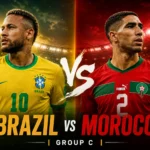
| C | Brazil | Morocco | Haiti eliminated |
| D | United States | Australia or Paraguay | Turkiye eliminated |
| E | Germany | Ivory Coast or Curacao | Ecuador’s fate decided on final day |
| F | Netherlands | Japan | Tunisia eliminated |
| G | Belgium or Egypt | TBD | New Zealand eliminated |
| H | Spain | Uruguay or Cape Verde | Saudi Arabia’s fate decided on final day |
| I | France | Norway | Iraq eliminated |
| J | Argentina | Austria | Jordan and Algeria’s fate decided on final day |
| K | Portugal or Colombia | TBD | DR Congo and Uzbekistan’s fate decided on final day |
| L | England | Croatia or Ghana | Panama eliminated |
A handful of group placings were still being finalised on the very last matchday, with Groups E, G, H, J and K all containing scenarios that depended on simultaneous results elsewhere. The eight best third placed teams, drawn from the remaining nations across all 12 groups, completed the 32 team field. Sweden, Scotland and Paraguay entered the final matchday at the top of the third place rankings, with Scotland’s fate hinging entirely on their result against five time champions Brazil.
The Round of 32: What Happens Next
For the first time in World Cup history, the knockout stage begins with a Round of 32 rather than a Round of 16, a direct consequence of the format expanding from 32 to 48 teams. The round runs from June 28 to July 3 across 16 single elimination matches, using 14 of the tournament’s 16 host venues.
The bracket has been deliberately structured to keep the highest ranked teams apart for as long as possible. Spain, ranked second in the world, and Argentina, ranked third, sit in separate pathways, as do England and France. If all four progress through their early knockout matches, none of them would meet before the semi finals at the earliest.
The opening Round of 32 match kicks off June 28 at Los Angeles Stadium, featuring the runners up from Group A and Group B. From there, the bracket unfolds across six days, with every match a straight knockout, extra time and penalties used to settle any deadlock.
Round of 32 | Key Fixtures to Watch
| Date | Notable Round of 32 Fixtures | Venue |
| June 28 | Group A runner up vs Group B runner up | Los Angeles Stadium |
| June 29 | Germany vs a third placed qualifier | Boston Stadium (Gillette Stadium) |
| June 30 | Mexico vs a third placed qualifier | Mexico City Stadium (Estadio Azteca) |
| July 1 | United States vs a third placed qualifier | Location to be confirmed by bracket |
| July 2 | Spain vs Group J runner up (Austria) | Los Angeles Stadium |
Group Stage by the Numbers
FIFA World Cup 2026 Group Stage | By the Numbers
| Statistic | Figure |
| Total matches played | 72 |
| Total goals scored | Over 220 across the group stage |
| Average goals per match | Above 3.0, among the highest in modern World Cup history |
| Debut nations | Cape Verde, Curacao, Jordan, Uzbekistan |
| Biggest winning margin | Germany 7-1 Curacao (Matchday 1) |
| Fastest goal of the group stage | Ismael Saibari for Morocco vs Scotland, scored within 72 seconds |
What to Watch For as the Knockout Stage Begins
- Whether Messi’s Argentina can go all the way. The defending champions topped Group J and now carry both momentum and the emotional weight of Messi’s record breaking individual tournament into the bracket.
- Whether Spain’s response to the Cape Verde shock was a turning point or a one off. La Roja’s underlying quality has never been in doubt, and a deep run now feels considerably more likely than it did after Matchday 1.
- Whether Cape Verde’s fairytale has one more chapter left. Even group stage elimination would not diminish what this nation of 600,000 people has already achieved on football’s biggest stage.
- Whether Germany’s resilience, built on late goals and a previously unheralded substitute in Deniz Undav, can survive the much higher stakes of single elimination football.
- Whether the new Round of 32 format delivers the drama FIFA promised when the expanded tournament was first announced. Early signs from the group stage suggest it will.