
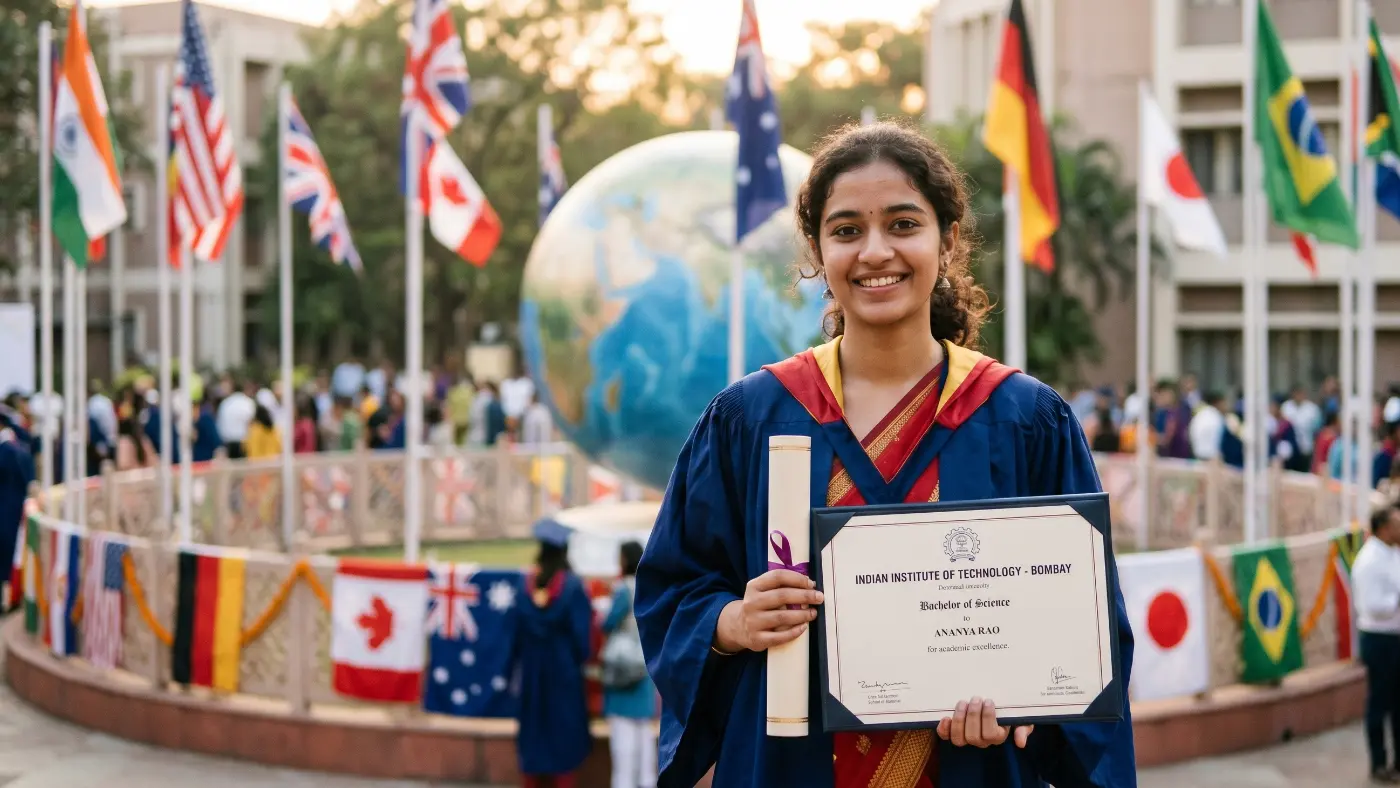
Six years after the National Education Policy (NEP) 2020 was introduced, its long-term vision is finally yielding tangible results for Indian students. In 2026, the most significant change isn’t just what students are learning, but how the world perceives an Indian degree.
Bridging the “12+4” Gap
For decades, Indian students with 3-year bachelor’s degrees faced hurdles when applying to top-tier US or Canadian universities that required a 16-year education (12+4). Under NEP 2020, the widespread adoption of the 4-year multidisciplinary undergraduate program has leveled the playing field, allowing Indian graduates to apply for PhDs and Master’s programs abroad without extra bridge courses.
The Academic Bank of Credits (ABC)
The ABC system has fully matured in 2026. Students can now “bank” their credits and move seamlessly between different institutions or take a gap year for an internship without losing their academic progress. This flexibility is being recognized by international accreditation bodies as a gold standard in modern education.
Global Campuses and Dual Degrees
2026 has seen the opening of several satellite campuses of top 100 global universities in India. Furthermore, Indian IITs and IIMs have launched “Joint Degree” programs with international partners, meaning a student can study in India but graduate with a degree recognized as equivalent in both New Delhi and London.