For most of the 20th century, the construction industry was the world’s primary consumer of carbon-heavy materials like virgin concrete and steel. In 2026, the industry is experiencing its most radical material shift in history: the move toward Circular Construction using Recycled Steel and Mass Timber.
The Problem: The Carbon Footprint of Building
The embodied carbon of a building – the emissions caused by mining, processing, and transporting materials before a single brick is even laid – is massive. Traditional steel production is highly energy-intensive, and concrete production is a leading driver of global CO2 emissions.
The Two Pillars of Sustainable Construction
1. Recycled Steel: Infinite Circularity
Steel is a miracle material for sustainability because it can be recycled endlessly without losing its structural integrity.
- Electric Arc Furnaces (EAFs): By using EAFs powered by renewable energy, steel can be melted and re-cast with a fraction of the energy required for virgin ore production.
- The Material Bank Concept: Modern buildings are being designed as material banks. Architects keep a digital record of all the steel used, so that 50 years from now, when the building is decommissioned, the steel can be easily recovered and reused for a new structure.
2. Mass Timber: The Carbon Sink
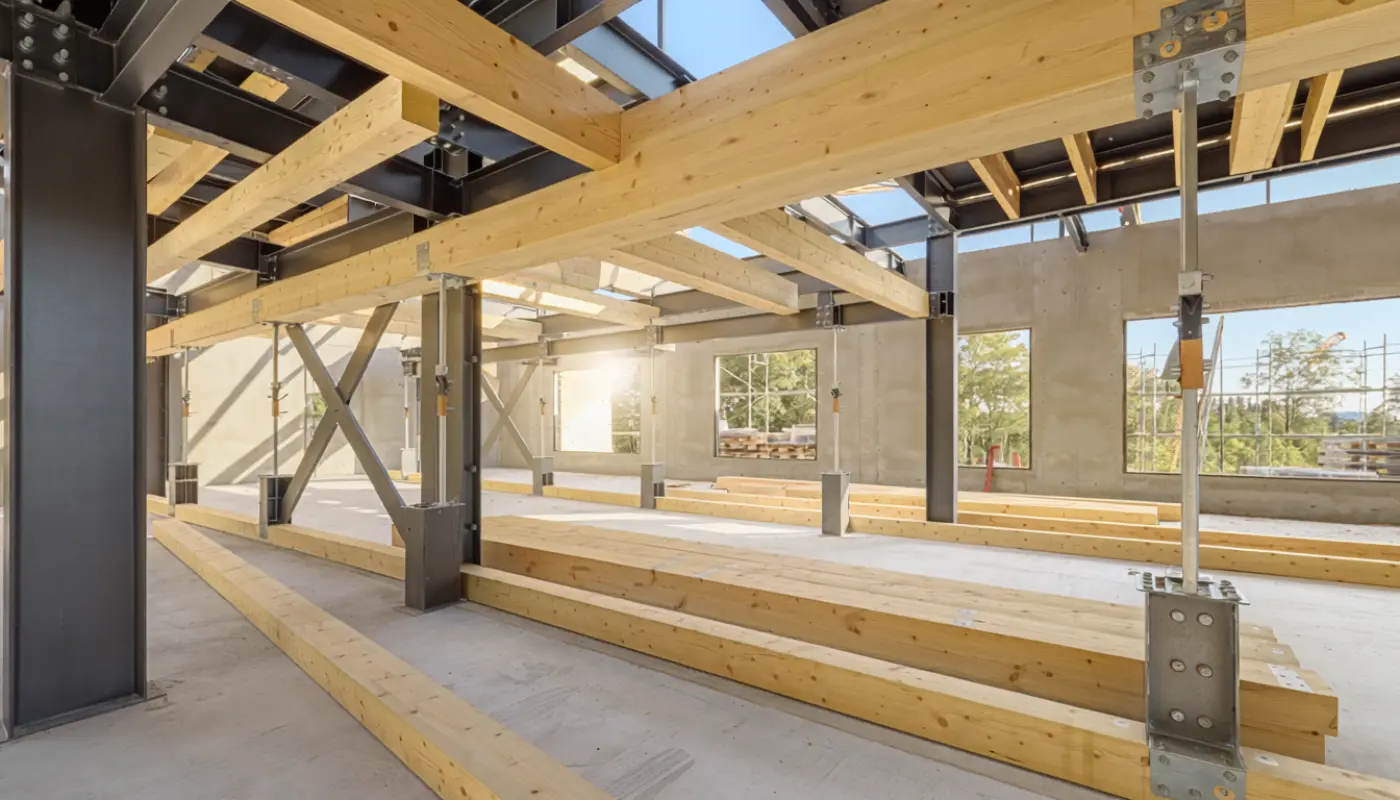
Mass timber engineered wood products like Cross-Laminated Timber (CLT) has emerged as the premier sustainable alternative to steel and concrete for medium-rise buildings.
- Sequestration: Trees absorb CO2 while they grow. When that timber is used in a building, the carbon remains locked inside the structure for the life of the building.
- Speed and Precision: Mass timber is pre-fabricated off-site with laser-cut precision. This reduces construction site noise, cuts build-time in half, and results in near-zero waste compared to traditional “on-site cutting.”
Why the Shift is Accelerating
The transition to these materials is driven by three factors:
- Regulatory Mandates: Cities are implementing Embodied Carbon Caps, forcing builders to prove that their materials are sustainable.
- Insurance and Finance: Developers are finding it easier to get low-interest green loans if their project demonstrates a lower carbon footprint.
- Aesthetics and Health: Studies show that buildings with exposed natural timber have higher biophilic value – they are warmer, quieter, and generally improve the mental well-being of the people who work inside them.
Construction is moving from an extraction-based industry to an innovation-based one. By using materials that store carbon or have already been refined, we are turning our city skylines into a permanent, carbon-sequestering resource.