
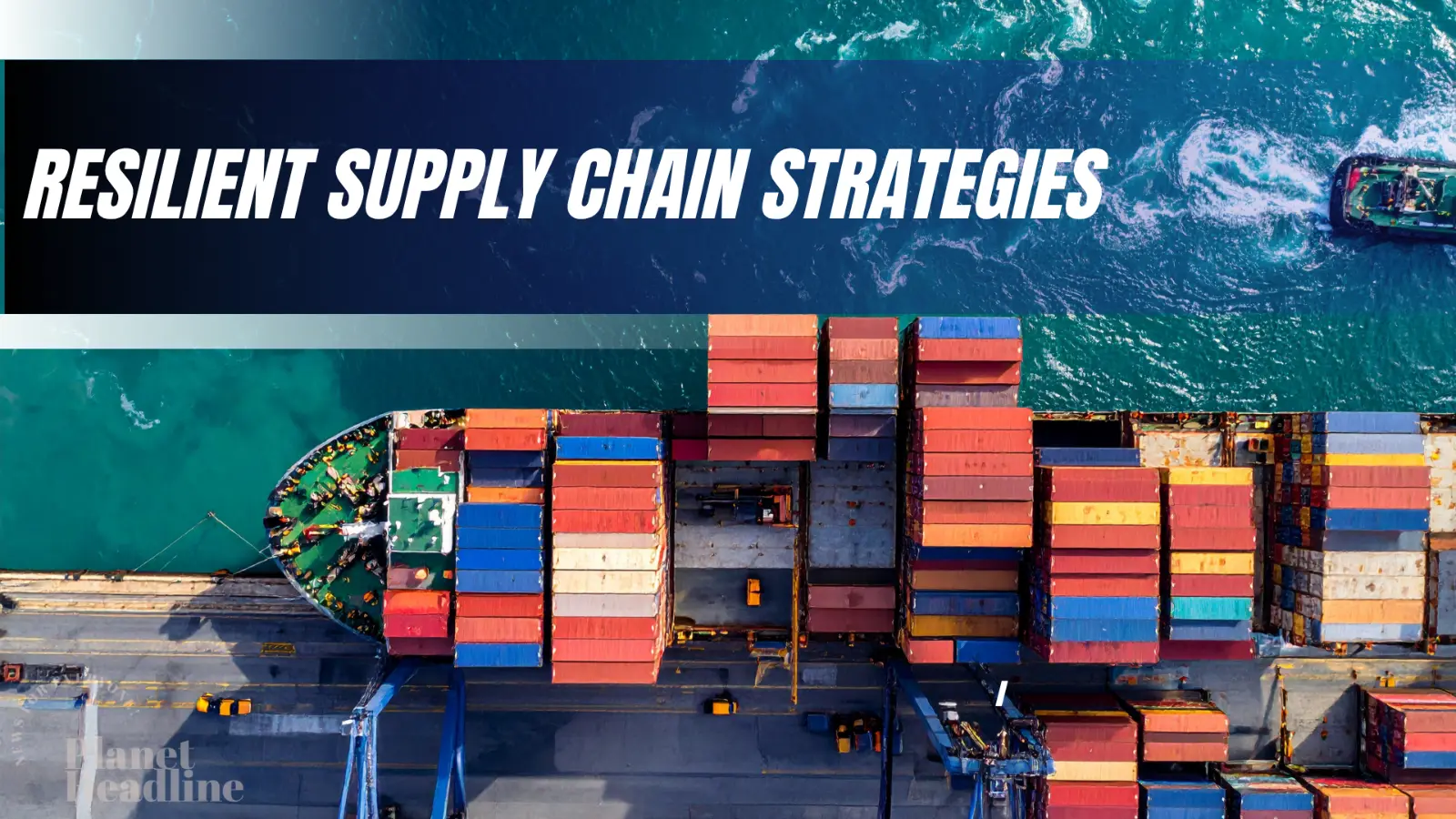
For thirty years, supply chains were built on one metric: Cost. We sourced from whoever was cheapest, kept minimal inventory (Just-in-Time), and accepted that if a major disruption occurred, the global market would eventually recover. That assumption was shattered by the shocks of 2025. In 2026, the governing metric for supply chain management has shifted from Efficiency at Any Cost to Resilience at a Competitive Price.
The New Pillars of Supply Chain Resilience
Building a resilient supply chain is not about eliminating all risk; it is about building the capacity to absorb shocks and recover quickly.
1. End-to-End Transparency (Visibility)
Most businesses do not know who supplies their suppliers. If a tier-two supplier in a remote region suffers a disruption, your production line stops, and you don’t even know why. In 2026, leaders are investing in Digital Twin technology – virtual, real-time representations of their entire supply chain, from the raw material origin to the final consumer delivery.
2. Factor Automation into Network Design
As robotics adoption hits a tipping point, companies are no longer just automating factories. They are automating the design of their networks. By using AI, companies can now simulate thousands of what-if scenarios: “If a port shuts down in region X, how do I automatically reroute my components?” Automating this decision-making process is the difference between a minor delay and a total collapse.
3. Move from Just-in-Time to Just-in-Case
The Just-in-Time (JIT) model failed because it had zero margin for error. 2026 strategy favors Strategic Buffering. Companies are intentionally holding higher levels of inventory for critical components that have long lead times or few alternative suppliers. This adds to the cost, but it acts as an insurance policy that ensures your business stays open when your competitors are stalled.
The Geopolitical Reality: Friend-Shoring
The most significant long-term shift in 2026 is Friend-Shoring. Companies are reconfiguring their manufacturing footprint to align with geopolitical allies, effectively reducing the risk of sudden export controls or trade barriers that defined the 2025 disruptions.
The Workforce Factor
You can have the best digital tools, but if you don’t have the skilled labor to run your local manufacturing hubs, your strategy will fail. Modern leaders are now treating Talent Supply as part of their supply chain strategy. They are engaging with local governments, vocational schools, and universities to ensure that wherever they establish production, there is a ready pipeline of tech-literate, blue-collar talent.
Resilience is not a project you finish; it is a permanent operational mindset. The companies that thrive in the coming years will be the ones that accept uncertainty as a constant and build their infrastructure to be flexible, transparent, and – above all – human-centric.
This video provides a practical breakdown of how businesses are redesigning their supply chains to handle geopolitical and climate risks, offering clear examples that complement the strategic concepts in the article.