
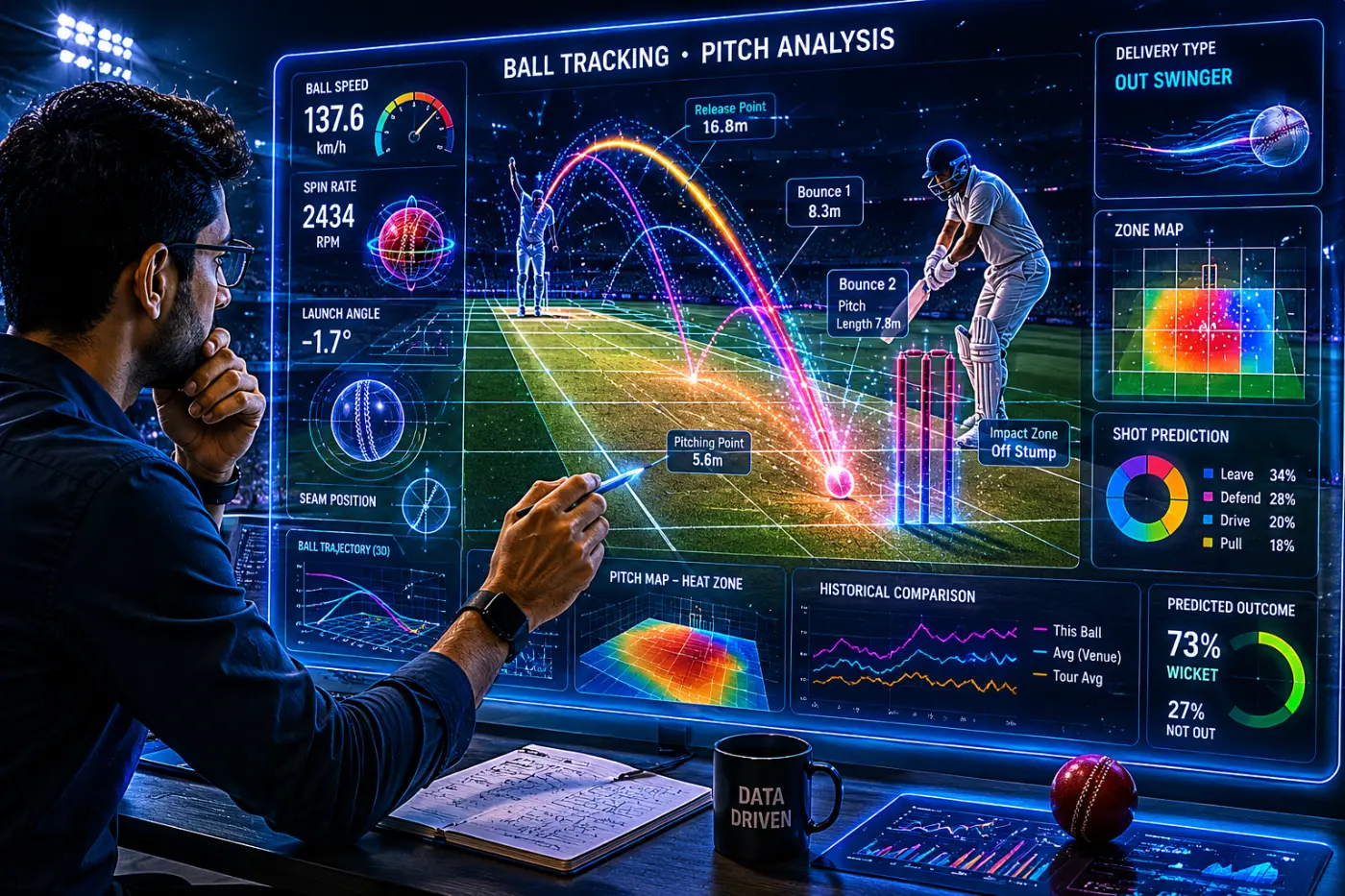
Cricket has always been a game governed by numbers, but the explosion of short-format leagues like the IPL has pushed statistics into a whole new territory. We are far past the era of simply looking at a batsman’s career strike rate or a bowler’s economy. High-performance teams are leaning on advanced cricket analytics and big data, turning dugouts into data science hubs where every single delivery is predicted, simulated, and optimized before the players even step onto the field.
The Magic of “Matchups” and Predictive Modeling
The core of modern T20 strategy revolves around the concept of “matchups”. Using historical ball-by-ball data tracking engines, algorithms can map out a batsman’s exact vulnerability zones against a specific type of bowler under highly precise conditions.
For instance, data might reveal that a star opening batsman scores at a strike rate of 160 against standard off-spin, but his scoring drops to 95 if an orthodox left-arm spinner bowls a specific line into the rough during the third over of a powerplay. Captains use these real-time analytics to make tactical bowling changes that disrupt a batsman’s natural rhythm.
Smart Tracking Ecosystems: Wearables and Smart Balls
The data feeding these predictive models goes far deeper than basic broadcast scorecards. Players are tracked by an array of high-tech sensors:
- Smart Balls with Embedded Microchips: Advanced cricket balls now feature internal IoT sensors that measure the exact revolutions per second (spin rate), release speed, and drift trajectory of a delivery in real-time.
- Lidar and Computer Vision Tracking: Stadium cameras utilize high-speed optical tracking to chart the exact bounce profile, pitch deviation, and swing metrics of every ball, mapping them onto a 3D digital twin of the pitch.
- Biometric Wearables: During practice and live matches, players wear smart vests that track heart rate variability, metabolic stress, and muscle fatigue, allowing sports scientists to predict and prevent injuries before they happen.
Re-Engineering the Auction Table
Perhaps the most crucial impact of big data happens long before the stadium lights turn on – at the player auction table. Teams are using specialized “Expected Runs” (xR) and “Run Saving” algorithms to discover undervalued domestic talent. By stripping away emotional biases and media hype, data allows smaller franchises to assemble highly balanced, championship-winning rosters based on pure statistical efficiency, permanently leveling the playing field of modern sports.