
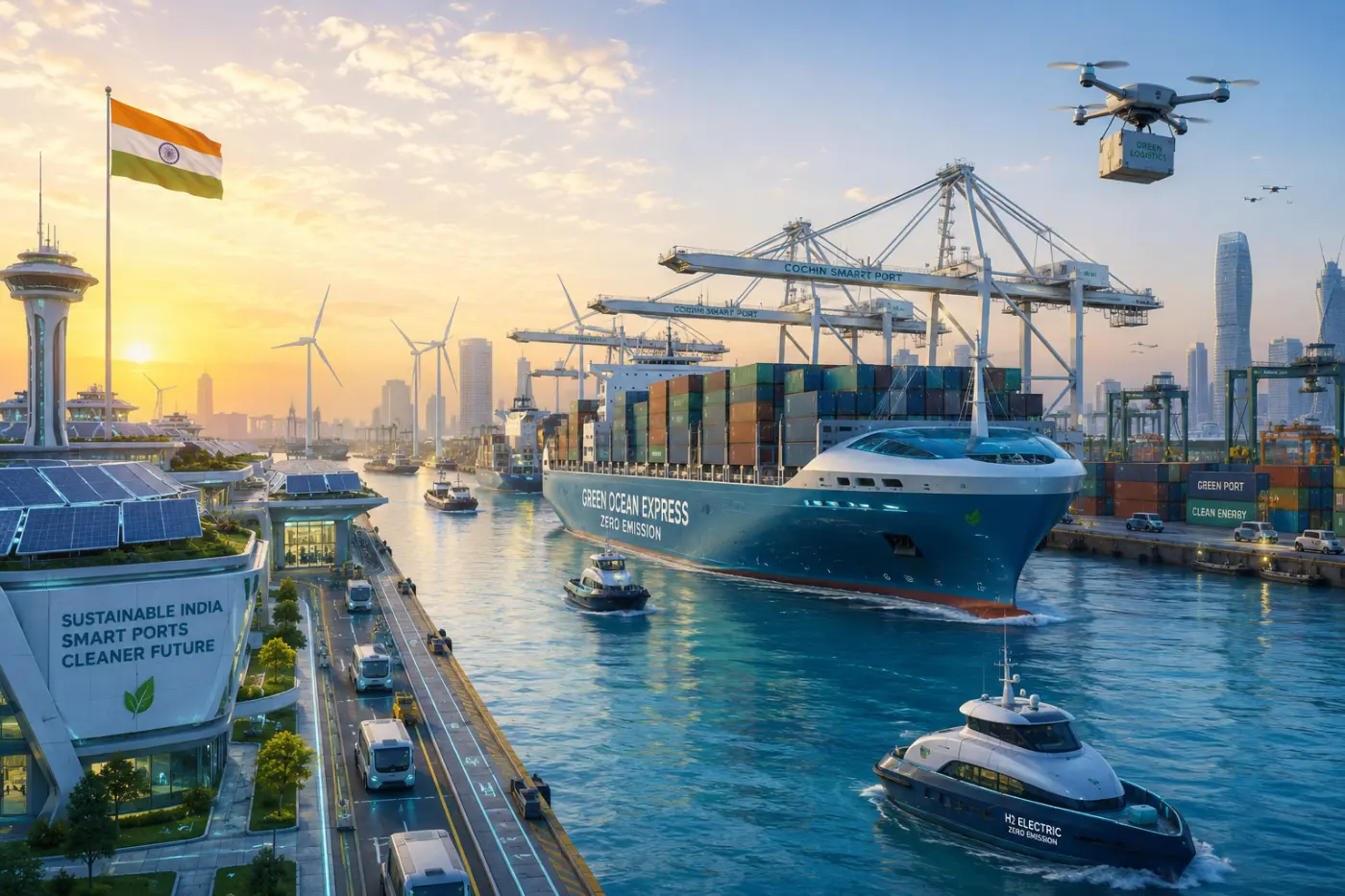
India is looking beyond its land borders to fuel its next decade of economic growth. The “Blue Economy 2026” policy has officially transitioned from a vision document to a multi-billion dollar operational framework, targeting sustainable growth through ocean-based resources.
The Three Pillars of the Blue Economy
The 2026 policy focuses on three high-impact sectors:
- Deep-Sea Mining: India has deployed autonomous underwater vehicles to explore the Indian Ocean floor for “polymetallic nodules” containing nickel, cobalt, and copper – essential minerals for the global EV battery supply chain.
- Sustainable Marine Tourism: From the Lakshadweep islands to the Andaman archipelago, the government is incentivizing “Low-Impact, High-Value” eco-resorts that utilize wave energy and desalination plants.
- Smart Fisheries: Using satellite data and AI, Indian fishermen are now guided to specific “high-yield zones”, reducing fuel consumption and preventing overfishing in vulnerable coral areas.
Why This Matters for Investors
The Blue Economy is expected to contribute nearly 10% of India’s GDP by 2030. For investors, this opens up massive opportunities in maritime logistics, renewable ocean energy (tidal and wave), and marine biotechnology.